Guilin travel guide
桂林
Since ancient times, the saying 'Guilin's landscapes are the finest under heaven' has praised the scenery of the Li River. The riverbanks are picturesque, and when you drift along the Li on a bamboo raft,…
12 places · In the guidebook: pages 2412–2429

Guilin, Guangxi Zhuang Autonomous Region · AI illustration for China Trip
Quick itinerary
Guilin in 2 days
- Day 1
- Xiangshan Park→
- Qixing Park→
- Diecai Hill→
- Twin Pagodas
- Day 2
The feel of the place
- Li River
- Since ancient times, the saying 'Guilin's landscapes are the finest under heaven' has praised the scenery of the Li River. The riverbanks are picturesque, and when you drift along the Li on a bamboo raft, you will feel as though you have stepped into a 360-degree ink-wash painting, with so many beautiful peaks and waters that you can hardly take them all in. If you happen to catch a light drizzle, all the better, since the 'misty rain on the Li River' is famously beautiful. Just try to avoid a downpour, though!
- Karst Landscape
- Across Guangxi you will find classic karst topography, and nearly every hill contains caves, big and small. The most famous include Seven Star Cave, Guan Cave and Reed Flute Cave. Note, however, that most of the stalactites inside these caves have been finely carved by hand on top of their natural forms and then lit with multicoloured lamps. If you happen to spot cement patches on a wonderfully shaped stalactite, don't let it spoil your mood. Gliding by boat through the deep, narrow caves and admiring the scenery is still very enjoyable.
- Star-Rated Public Toilets
- Guilin's urban development always starts from how to attract more visitors. Spend a few days wandering the city and you will discover that its public toilets offer a star-rated level of comfort, and they are all free. This is one of the projects the Guilin municipal government has pushed hard to make things convenient for visitors. For example, the public toilet on Elephant Trunk Hill is built right at the elephant's rear, perched high up with a view that is truly unique.
Folk Customs
Guilin is home to 28 ethnic minority groups, including the Yao, Dong, Zhuang and Miao. Their presence gives the city rich folk customs and distinctive courtship and wedding traditions. The Yao's traditional long-drum dance (also known as the yellow mud drum) is graceful, with drumbeats flying everywhere. The Dong's 'Yue Ye' get-together is colourful and lively. Yao hospitality means serving oil-tea to every guest with deep warmth. During the Dragon Boat Festival, many peoples race dragon boats, singing rings out across the countryside, and boats visit one another to forge kinship. Zhuang and Miao young men and women have unique ways of socialising and choosing partners, and their wedding customs are playful and full of charm. The Zhuang's distinctive 'Song Fair Festival' (also called 'Third Month Third'), along with 'tossing the embroidered ball', 'carrying the bride', 'chopping the ladder', 'tearing down the bridge' and 'singing duets', gives their weddings a special character. Miao people express their feelings through 'stepping on the moon' (also called 'visiting villages'), 'youfang' (also called 'hill fair') and the 'Eighteen Rules of Duet Singing', among other customs.
Group Tour Tips
1. You can visit the attractions within Guilin city on your own; there's no need to join a tour.
2. Every hotel in Guilin has a booklet issued by the local tourism bureau listing the admission fees for each attraction. Be sure to take a look.
3. Day trips to nearby attractions can be booked through tour groups. You can sign up after arriving in Guilin, which is very convenient.
Preparation and Information
Language
Most people in Guilin speak Guiliu dialect. Members of different ethnic groups can generally communicate with one another in Mandarin, and in some tourist areas many people also understand English and Cantonese.
Climate and Travel Seasons
Guilin lies in the southwest of the Lingnan mountain system, at an average elevation of 150 metres, with distinctive karst terrain. It has a subtropical monsoon climate that is mild and rainy. January is the coldest month, with a daily average temperature of 5°C, while August is the hottest, averaging 32°C. Winters are not severely cold and summers are not scorching, so the city is suitable for travel in any season.
Things to see

Two Rivers and Four Lakes (Ring City Waterway)
1–2 hours · Two Rivers and Four Lakes night cruise: ¥210; Four Lakes night cruise (round trip): ¥175; One River and Four Lakes day cruise: ¥90 for adults; tower admission: ¥35
More than 800 years ago, the Two Rivers and Four Lakes were as busy with boats as they are today, and the riverside residents, just like us now, treated this place as a lovely spot to enjoy the mountains and waters. The difference is that today's dazzling neon along the banks has replaced the red lanterns of the Song era. This ring-shaped waterway includes the Li River, Taohua River, Rong Lake, Shan Lake, Gui Lake and Mulong Lake. The riverside scenery goes without saying, but the most captivating moment of this colourful stretch is at night. Don't worry that darkness will obscure the views; on the contrary, night is when the waterway begins to show its enchanting charm. Whether you float on Dangbo Lake or stroll along the banks, you can enjoy the bewitching night scenery.
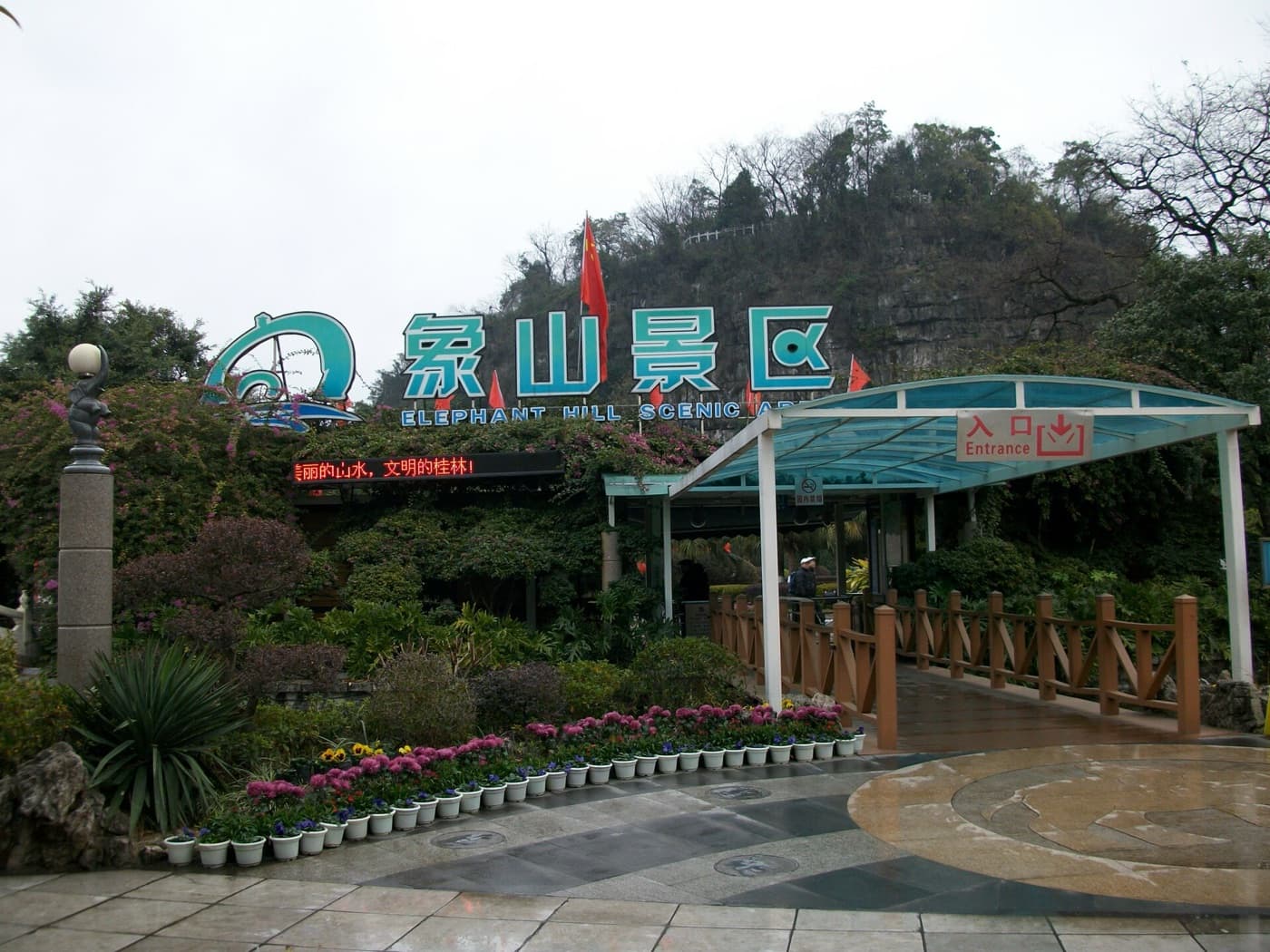
Elephant Trunk Hill Scenic Area
1–2 hours
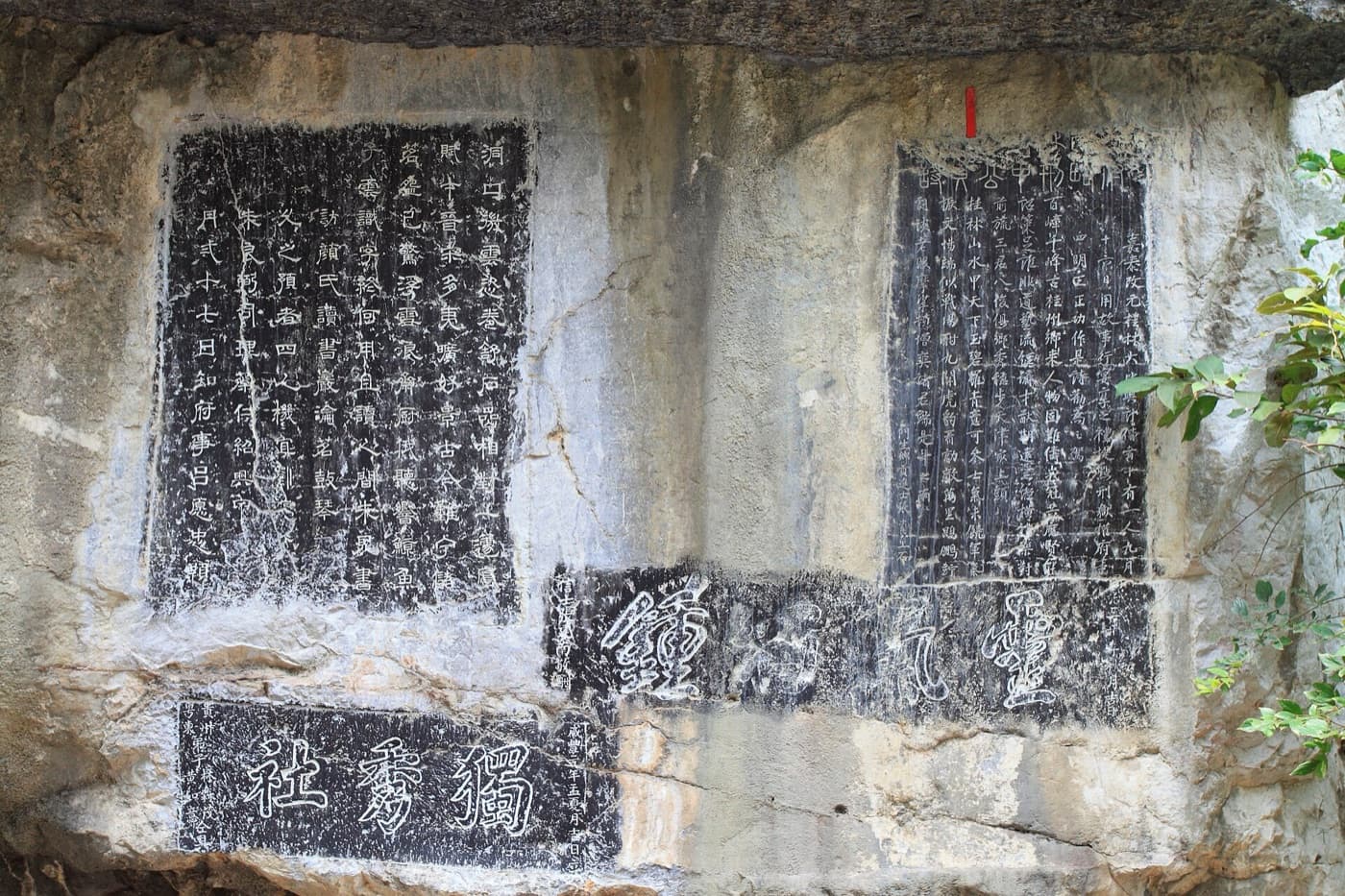
The closest way to see Elephant Trunk Hill is to rent a raft and drift out on the lake. Be sure to take plenty of photos as you soak up the views, or your trip to Guilin will feel incomplete. To most Guilin locals, Elephant Trunk Hill is the symbol of the city. Formed from limestone that settled on the seabed hundreds of millions of years ago, it is a classic example of karst landscape. The park also holds cliff inscriptions, the most valuable of which is Lu You’s poetic letter (陆游诗札), which lovers of classical literature should not miss.
Sun and Moon Twin Pagodas Cultural Park
The Sun and Moon Twin Pagodas are billed as the world’s number one bronze pagoda. They stand on the central axis of Guilin city, next to the Water Moon at Elephant Trunk Hill (象山水月). The Sun Pagoda is made of bronze, stands 41 metres tall and has nine storeys; you can take the lift to the top for a view over the city. The Moon Pagoda is a glazed tower, 35 metres tall with seven storeys, where visitors can pay their respects to the Old Man under the Moon, the god of matchmaking. The twin pagodas also hold a hidden wonder: a bridge beneath the lake’s surface between them. Today, the site has become one of Guilin’s most beautiful night-time viewing spots.
1 hour · ¥35
Dongxi Lane
Dongxi Lane sits beside Prince City and is a mixed-use commercial district combining culture, shopping, dining, leisure and entertainment. It is the only surviving historic lane district in Guilin from the Ming and Qing dynasties, offering a window onto the city’s old character. It includes the East Lane of Zhengyang Street, Jiangnan Lane, Lanjing Lane and other traditional lanes. Here traditional culture meets distinctive architecture: the Ming and Qing-style buildings of old Dongxi Lane have been restored, presenting visitors with a multicultural historic district defined by ‘city lanes and famous mansions’.
2–3 hours
Solitary Beauty Peak · Prince City Scenic Area
Solitary Beauty Peak, inside Prince City, is an excellent spot for a bird’s-eye view of all of Guilin. Twelve generations of 14 princes lived here. The palace was built when Zhu Shouqian, a grandnephew of Ming founder Zhu Yuanzhang, was enfeoffed as Prince of Jingjiang. It is the best-preserved Ming dynasty princely palace in China. The famous line ‘The landscapes of Guilin are the finest under heaven’ (桂林山水甲天下) comes from a Song dynasty inscription on Solitary Beauty Peak inside the palace.
3–4 hours · ¥100
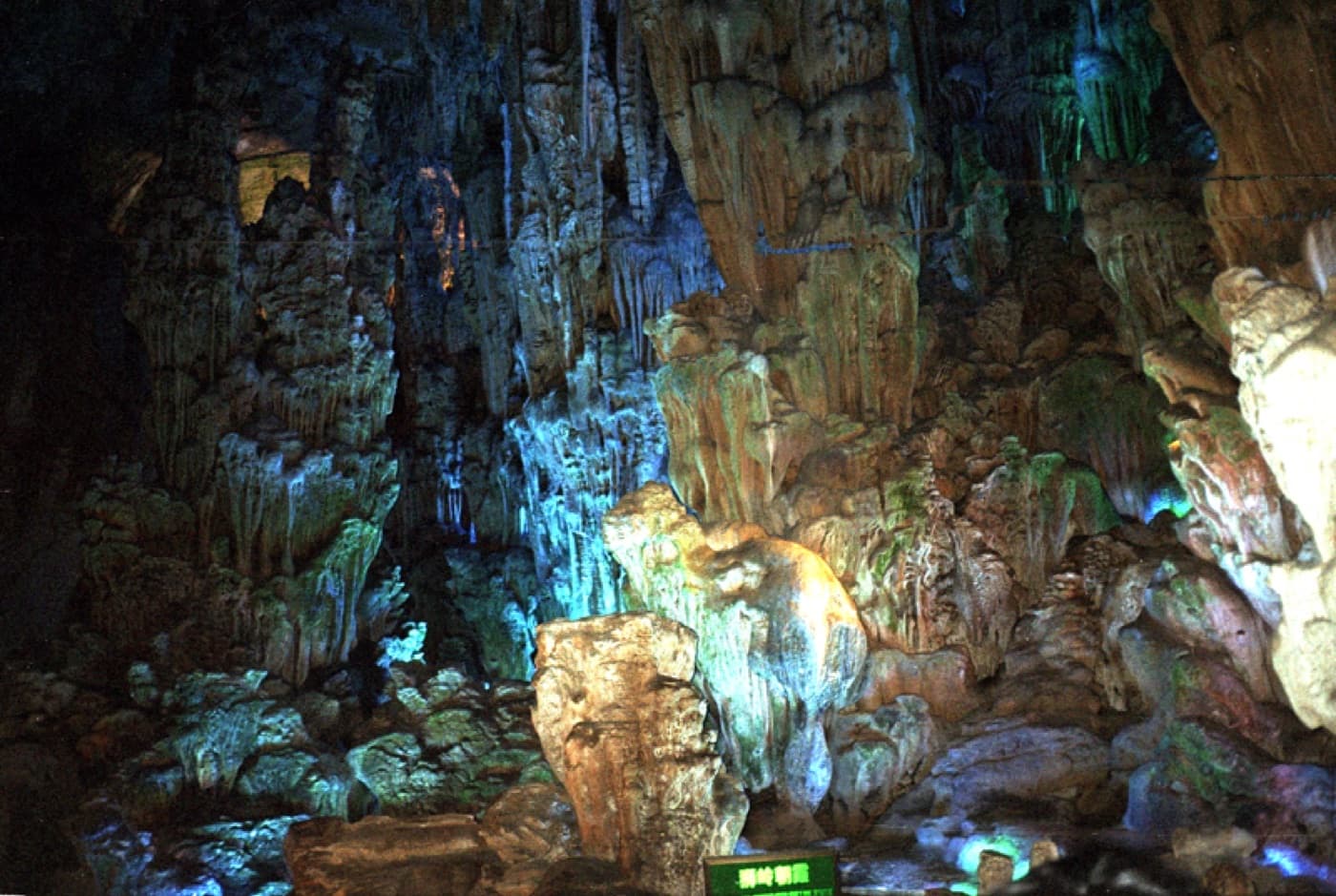
Reed Flute Cave
Walking into Reed Flute Cave is like drawing back one curtain after another, and with each passage you will feel as though you have stepped into another world. Thousands of rock formations, each with its own character, are magnificent, sacred or eccentric, and a slow stroll will leave you full of wonder. The Crystal Palace is the grandest part of the cave, and its stalactites closely resemble the scene of the Monkey King (孙悟空) raiding the Dragon King’s palace in the East Sea, full of mythological charm. However, the cave shows considerable human alteration and its ticket is relatively expensive, so those who are not keen on such caves may wish to skip it.
1 hour · ¥90
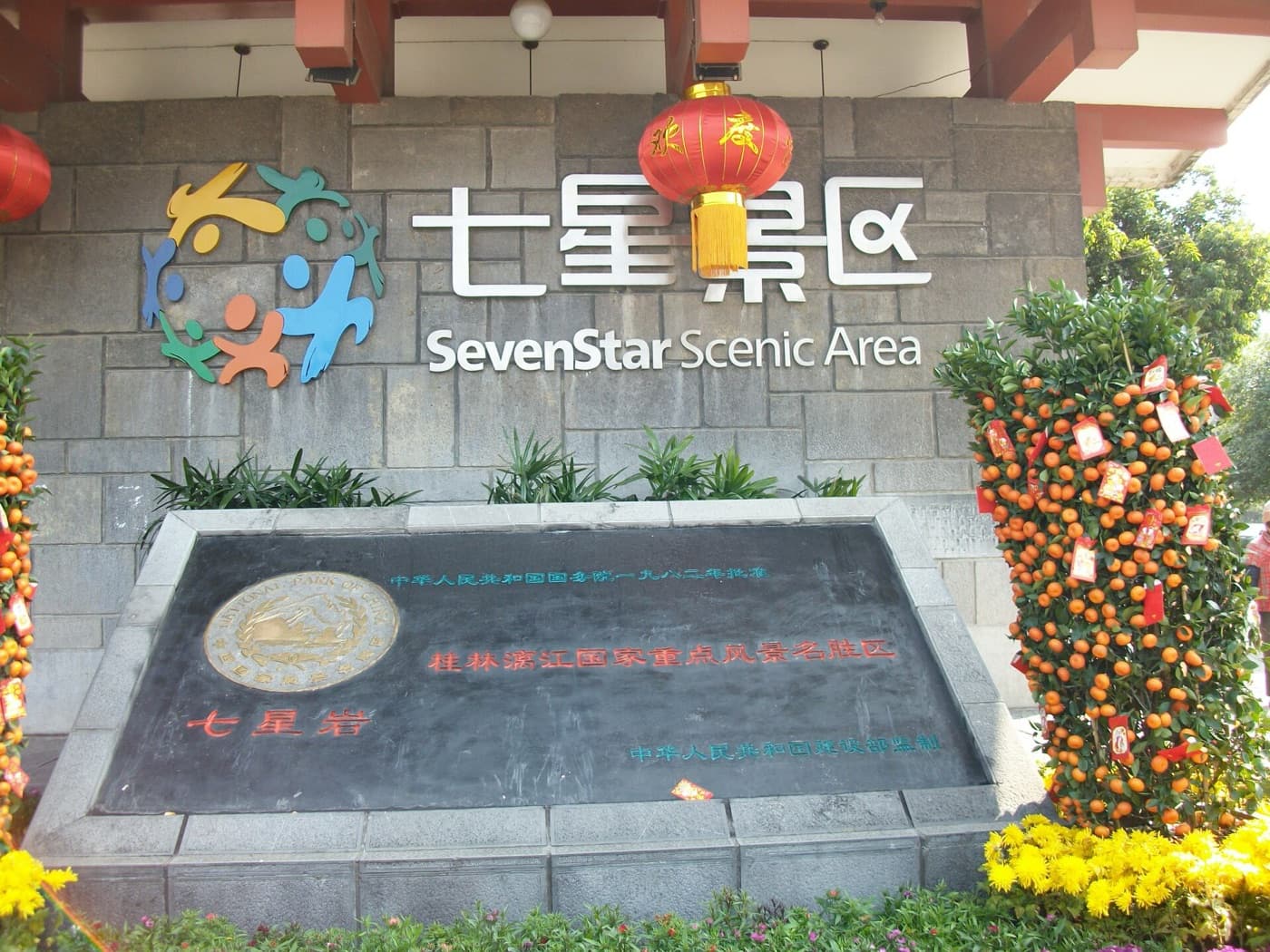
Seven Star Park
Guilin has no shortage of scenic sites steeped in history, and Seven Star Park is one of them. There is no need to dwell on its beauty here. If you learn something of its history beforehand, the scenery will gain depth beyond the purely visual. Its most famous feature, Seven Star Cave, is truly stunning.
2–3 hours · ¥55
Diecai Hill
The hill takes its name from the rock strata that cross its slopes in layers, like stacked silk. Its main summit, Mingyue Peak, offers a view over the surrounding mountains, where the layered rock and riotously blooming wildflowers make the meaning of ‘Diecai’ (layered colours) immediately clear. Diecai Pavilion is one of the best vantage points for the scenery, and Bofu Hill is another.
1–3 hours · ¥25
Getting there & around
Getting There
You can reach Guilin by plane, bus or high-speed train. Guilin now runs luxury direct coaches to neighbouring provinces and cities, such as all of Guangdong Province, Changsha, Wuhan, Haikou and Xiamen, which are quite comfortable. You can also choose the high-speed rail.
By Air
Guilin Liangjiang International Airport operates more than 50 domestic and international routes, and all major Chinese airlines fly to Guilin. It has direct flights to more than 30 major and mid-sized cities in China, as well as to Fukuoka in Japan, Seoul in South Korea, Bangkok in Thailand and Kuala Lumpur in Malaysia.
By Rail
The Qiangui, Jiaoliu, Nankun, Lizhan and Xianggui railway lines run through the whole of Guilin. In 2014, the Guiyang–Guangzhou High-Speed Railway opened, giving Guilin a network that links north to south and east to west. In recent years, with the opening of the Hengliu Railway and the Guiyang–Guangzhou High-Speed Railway, transport in Guilin has become even more convenient. Guangxi was also the first to offer a 'one-ride-through' high-speed rail service to Hong Kong. Guilin South Railway Station is the city's main passenger station, while Guilin North Station currently has departures to destinations including Beijing and Shenzhen.
By Road
The road network includes the Guihai Expressway (via Liuzhou and Nanning to Beihai), the Guihuang First-Class Highway (to Hunan), the Guilin–Yangshuo Second-Class Highway and others.
Getting Around the City
Traffic within the city flows smoothly, with almost no long jams. Buses reach every corner of the urban area on a flat ¥1 fare. Some air-conditioned buses and routes to the city outskirts and nearby counties charge ¥2.
Eight free city bus routes reach the main attractions, scenic areas and major streets in the urban district. A free shuttle for AAAA-rated scenic areas departs from Seven Star Park every 15 minutes, stopping for three minutes at each attraction. You can board at the shuttle stop at each attraction's entrance.
tip: Guilin's 'Three Freebies'
1. Local Guilin residents enter parks free of charge before 7:00 and after 19:00.
2. Some bus routes (Nos. 51–58) are free, a first in China.
3. The shuttle buses serving AAAA-rated scenic areas in the city are free.
First departures: Seven Star Park 8:15, Reed Flute Cave 9:15. Last departures: Seven Star Park 16:20, Reed Flute Cave 17:20.
tip: 1. Night photography: when cruising the Li River by boat, look for good camera angles. The night view of 'Xiangshan Moon on the Water' is superb, and photography enthusiasts should not miss it.
2. Free admission: since 31 January 2022, the Elephant Trunk Hill scenic area has been fully open free of charge.
tip: 1. Best time for a night cruise: if you're taking a boat trip, a night cruise is recommended. Lights, reflections, the dark sky and the landscape weave together, and some feel this is when Guilin shines most brilliantly. Boats depart every 15 minutes from 19:00 to 21:30 daily.
2. Glass Bridge: visitors who have been here will never forget it, especially those who have seen it glow at night. The Glass Bridge used to be open free of charge, but heavy foot traffic once damaged it, so entry now requires a ticket.
3. Night photos: if you are sitting on a cruise boat, photos tend to blur, so it's best to bring a tripod.
4. Official boats: In Guilin you will hear someone ask “Want a boat ticket?” This is the so-called “official boat,” a large tour boat that sails directly from Guilin to the Yangshuo County pier. The fare is around ¥200, with more than 90 passengers per boat, and it goes straight to Yangshuo. However, it does not stop along the way for you to enjoy the Li River scenery, so most people choose not to take it.
Eat & drink
Guilin cuisine is based on Cantonese, Sichuan and Hunan cooking, and leans toward spicy flavours. Lotus-leaf duck, stir-fried chicken with water chestnuts, old duck with white ginkgo, Lipu taro braised pork and Luohan casserole chicken are all signature dishes, and you can find authentic versions at any star-rated hotel.
Rice noodles are also a Guilin specialty, with many varieties; the most famous are “horse-meat rice noodles” (马肉米粉). Locals also often eat a noodle dish topped with sliced braised beef, known as luroufen. Beyond that, the nun's noodles at Yueya Hill Scenic Area, and the zongba (粽粑), water chestnut cake and stir-fried field snails on Nanxin Road Food Culture Street are all well known. Be sure to try Guilin's ciba (糍粑), and once you've had one, you'll want another.
Dining and Safety
Restaurants in Guilin, large and small, even rice noodle shops, all display their prices clearly. As long as you avoid a black-market shop, you can relax and eat your fill. Most restaurants in Guilin do not charge for bowls and chopsticks, and tea is usually free too. If a charge applies, it is normally announced in advance. Do not carry your bag loosely on your back. Zhengyang Pedestrian Street and Xicheng Road Pedestrian Street have security guards, so they are safer.
Recommended Food Streets
Guilin has six main food streets: Binjiang Road Food Street (from Fubo Hill to Elephant Trunk Hill), Jiefang West Road Food Street, Putuo Road Food Street (at the Chaoyang Road junction), the Food City (200 metres to the left of the bus station), Zhishan Road Food Street (opposite the Food City), and the most famous one, near the Clock Tower in Central Square.
Local Snacks
Authentic Rice Noodle Shops
Many rice noodle shops along the streets serve very good food. Recommended options include Chongshan Rice Noodles, Shengli Rice Noodles, Shenlu Rice Noodles, Danzi Rice Noodles and Ritou Huo Rice Noodles.
Oil Tea
At midday, as you stroll through Guilin's streets and alleys, you will see many locals, each with a bowl of oil tea, enjoying a leisurely lunch with staples such as fried rice noodles, water-soaked ciba, boat-shaped cake and radish cake. Oil tea has only become popular with Guilin residents in recent years, but the ethnic minority communities in the counties around Guilin have long enjoyed “dǎ” (pounding) oil tea. It is said that northern Guangxi oil tea was once praised by Emperor Qianlong as a “refreshing divine soup.” Everywhere, oil tea is called “dǎ” rather than “boiled,” but each locality's version has its own distinctive flavour. Gongcheng oil tea is considered the finest of all, famous throughout northern Guangxi and beyond. To make it, choose high-quality green tea and steep it in boiling water for about 20 minutes until the leaves are soft, then drain. Put suitable amounts of lard, ginger, spring onion, garlic and crushed peanuts into an iron pan and cook over low heat, constantly pounding the tea leaves with a wooden mallet until they break down. Finally, add water and bring to the boil, and a pot of fragrant oil tea is ready.
Guilin Zongzi
Varieties include bean zongzi, chestnut zongzi, lotus-seed paste zongzi, guozheng zongzi (steamed wrapped rice cake), and triangular zongzi, all widely sold. There is also taro cake, crispy outside and soft inside, and sweet, soft mung bean cake. Guilin's snacks are truly too numerous to list.
tip: Guilin's Three Treasures: Sanhua liquor, fermented tofu and chilli sauce.
Zhengyang Street
Zhengyang Street has a history of more than a thousand years. It borders the Li River to the east and connects with the old city wall to the north, and you can only appreciate its full character by visiting at night. The bars here are relatively upscale, usually serving only imported beer or spirits, and drinks are expensive. The open-air street-side bars are very pleasant: order a few bottles of local beer and sip slowly, drink heartily, or simply watch the crowds passing by.
Guilin Rice Noodles
Local SnacksRice is cooked until half-done, kneaded into dough and pressed through a machine into strands. Round strands are called mifen (rice noodles), and wide flat ones are called qiefen (cut noodles). To eat, cook the noodles and add spring onions, sliced braised meat and broth. Cut noodles have a slightly better texture than round rice noodles.
Ciba (Glutinous Rice Cake)
Authentic Rice Noodle ShopsA glutinous rice food that Guilin people love in winter. It can be enjoyed in many ways: grilled over charcoal and dipped in sugar, pan-fried, or cut into pieces and simmered in sugar water, suiting both sweet and savoury tastes.
Water Chestnut Cake (Mati Gao)
Authentic Rice Noodle ShopsMade mainly from rice flour. The flour is packed into wooden moulds shaped like water chestnuts, with a filling of water chestnut starch or sesame powder, then steamed over high heat until cooked and turned out.
Nun's Vegetarian Noodles
Authentic Rice Noodle ShopsThe essence lies in the broth, slowly simmered from yellow soybean sprouts, fresh straw mushrooms, shiitake mushrooms and winter bamboo shoots. The noodles are cooked in plain water and placed in the bowl. Once the broth is added, they are topped with Guilin tofu sticks, scrambled egg, vegetarian ham and other vegetables and seasonings. Fresh, savoury and refreshing, with excellent colour, aroma and taste.
Gongcheng Oil Tea
Authentic Rice Noodle ShopsThe taste is a little unusual, but you will get hooked the more you eat. It is served with a range of accompanying snacks.
Where to stay
Overall, the quality of hotels and guesthouses in Guilin varies widely, and star-rated hotels are relatively expensive. Independent travellers are advised to consider ordinary guesthouses or small and mid-sized inns first. These are mostly good value for money and offer decent service.
Huaman Travel Hotel
Recommended AccommodationConvenient transport and a pleasant environment.
- Address:
- No. 151 Pantao Road, Yangshuo County
- Phone:
- 0773-8822538
Shopping
Avoid shopping on a group tour's shopping stops. It is better to shop in places farther from the tourist sites. For example, you can buy Guilin landscape calligraphy and paintings at the Guilin Longquan Art Museum on Zhongshan South Road or at the museum calligraphy and painting shop of Xishan Company. At major supermarkets, you can buy Guilin specialties such as Sanhua liquor, fermented tofu, moon persimmons and taro.
Signature Dishes
Guilin's main specialties include Shatian pomelo, summer orange, luo han guo (monk fruit), white ginkgo, moon persimmon, Lipu taro, dried bean curd sticks and the Guilin Three Treasures.
Handicrafts mainly include Gui embroidery, paper umbrellas, hand-painted screens and knitwear, all with a distinctive Guilin character.
Guilin is also a major gemstone processing centre in China, and there are affordable, quality jewellery pieces at places such as Mopanshan Pier. The Guilin tourism authority has licensed national appraisal offices at jewellery counters. If you find fake goods being sold, you can file a complaint and seek compensation.
Steamed Pork with Lotus Leaf
Signature DishesA home-style classic. Made with skin-on pork belly, mung bean flour, lotus leaves, Guilin fermented tofu and various seasonings. The pork is cooked, brushed with soy sauce and fried, coated in mung bean flour, wrapped in lotus leaves, placed on a plate and steamed over high heat until tender.
Lipu Taro Braised Pork
Signature DishesA traditional banquet dish. Made with authentic Lipu taro, skin-on pork belly, Guilin fermented tofu and various seasonings. The skin-on pork and the cubed taro are each fried until golden, then the pork pieces are arranged skin-side down in a bowl, alternating with the taro, steamed until cooked and flipped out onto another plate.
Stir-Fried Pork Floss with Osmanthus
Signature DishesA traditional tonic dish. Distinctive for its dry, fragrant pork floss, golden egg floss and the clean scent of osmanthus, it is an excellent accompaniment to drinks. Said to soothe the stomach, calm the liver, nourish the kidneys and dispel cold.
Guilin Lotus-Leaf Duck
Signature DishesMade with a whole plucked duck, dried lotus leaf, diced lean pork, diced cooked winter bamboo, diced cured pork, deep-fried diced Lipu taro, diced shiitake, tender green peas, dried shrimp and seasonings. The duck is deep-fried until golden, the diced ingredients and seasonings are stir-fried briefly and stuffed into the duck's belly, then it is wrapped in lotus leaves and steamed.
Water Chestnut Steamed Meat Patties
Signature DishesMade from peeled water chestnuts, fresh lean pork and various seasonings, carefully prepared and steamed. Delicious and crisp, suitable for every season. Said to clear heat, quench thirst, whet the appetite and gently boost qi.
Stir-Fried Li River Shrimp
Signature DishesA typical Guilin-style dish. Made with river shrimp from the Li River, quick-fried with a splash of Guilin Sanhua liquor, letting you taste the clean sweetness of Li River water.
Li River Fish Braised in Beer
Signature DishesA bold experiment in using beer in Chinese cooking. It created a distinctive local dish that became hugely popular in Yangshuo and then spread across Guilin. Worth a try.
Nightlife
Night Cruise on the Two Rivers and Four Lakes
Along the Two Rivers and Four Lakes, 22 bridges light up at night and turn into crystal bridges. The dozens-of-metres-high water music fountain on Ronghu Lake also dances through the night, its rhythms shifting between vigorous and gentle.
Day trips & beyond
Crown Cave
Crown Cave lies on the east bank of the Li River in Caoping Township. It is a giant underground river cave. The hill above it resembles an ancient purple-gold crown, and the cave beneath gave the site its name. The water cave has been closed off for many years, so its scenery is well preserved. Inside, a remarkable variety of formations, including stalactites, stalagmites, columns, curtains, cloud basins, rim dams, goose-neck tubes, cave pearls, fallen rocks and sky-pots, show off their distinctive beauty.
1–2 hours
Gudong Waterfall
The highlight of Gudong Waterfall is that you can put on a raincoat and straw sandals and climb the steep cliff walls, going up against the current. This is a waterfall you can climb, and scrambling up rock through the water is both thrilling and refreshing. The scenic area also has a 62-metre-high suspension bridge, a challenge for the brave.
Nature
Silver Cave
The stalactites that formed in different geological eras inside Silver Cave pour down like the Milky Way in the night sky, glittering like silver, which is how the cave got its name. Its unusual natural scenery seems almost beyond human craft: colourful stalactite columns, curtains and ‘waterfalls’ form a wonder of karst art. Nature’s handiwork is on full display here, earning the cave the title ‘Wonder of the World’s Karst Caves’. Annual events such as the Lipu Village Flower Festival, the Lipu Taro Food Festival, a bicycle rally and extreme rock climbing add even more colour.
1–2 hours
Daxu Ancient Town
Daxu Old Street is not wide. Underfoot are worn bluestone slabs, and the old houses on either side are mostly two-storey Ming and Qing buildings with grey brick walls and grey tiles. Many old craft workshops survive, such as bamboo weaving and straw sandal makers, along with traditional herbal clinics and old barbershops, and the marks of history are visible everywhere. In the evening, find a seat, enjoy the river breeze and eat fresh river fish. It is simple, rustic and natural.
3–4 hours
Source: China Self-Guided Travel 2025 (《中国自助游》, Tianjin Science & Technology Press, Aug 2024), pp. 2412–2429. Translated from the Chinese edition; names and prices follow the guidebook. · Plain text version