Northern Guangdong travel guide
粤北
Northern Guangdong’s appeal lies largely in its mountains and waters, where natural scenery reigns supreme. Among these mountains is Danxia Mountain, famed for its karst landforms.…
13 places · In the guidebook: pages 2391–2400

Northern Guangdong, Guangdong Province · AI illustration for China Trip
Quick itinerary
Northern Guangdong in 4 days
- Day 1
- Huangtengxia Rafting→
- Huangchuan Three Gorges→
- Lianzhou Underground River→
- Lianzhou (accommodation)
- Day 2
- Day 3
- Yingde→
- Danxia Mountain→
- Nanhua Temple
- Day 4
The feel of the place
- Geological Wonders
- Northern Guangdong’s appeal lies largely in its mountains and waters, where natural scenery reigns supreme. Among these mountains is Danxia Mountain, famed for its karst landforms. The peaks of northern Guangdong may not match the grandeur of Mount Tai, the steep cliffs of Mount Hua or the grace of Mount Emei, but their unique geological structures and the almost supernatural hand of nature have sculpted a wide variety of strange rocks and precipitous peaks.
- Yao Village Charm
- Lianzhou is home to a concentration of Yao villages in northern Guangdong. Most are built into the hillsides, and some are more than a thousand years old. Walking along the stone-slab paths of these villages, you often meet Yao people in colorful traditional dress, carrying firewood, baskets or flowered bags. Whatever they are doing, they will greet you with a smile, and some may even invite you inside to share a bowl of fragrant Yao rice wine.
The Yao People
The Yao are mainly divided into two branches: the Guoshan Yao (mountain-crossing Yao) and the Paiyao (row Yao). The Yao have many exonyms: they are called White Yao or Black Yao according to their clothing, and Eastern-Side Yao, Western-Side Yao, Highland Yao or Lowland Yao according to their settlement patterns. The Yao also have self-designations: the Guoshan Yao call themselves “Mian” or “Youmian,” and the Paiyao call themselves “Min” or “Zaomin,” among others. Many Yao live in the mountainous areas of northern Guangdong and southern Hunan, where they are divided into more than a dozen tribes with distinct costumes. Because they live in remote mountain regions, they have preserved simple yet distinctive customs and folkways to this day.
Things to see
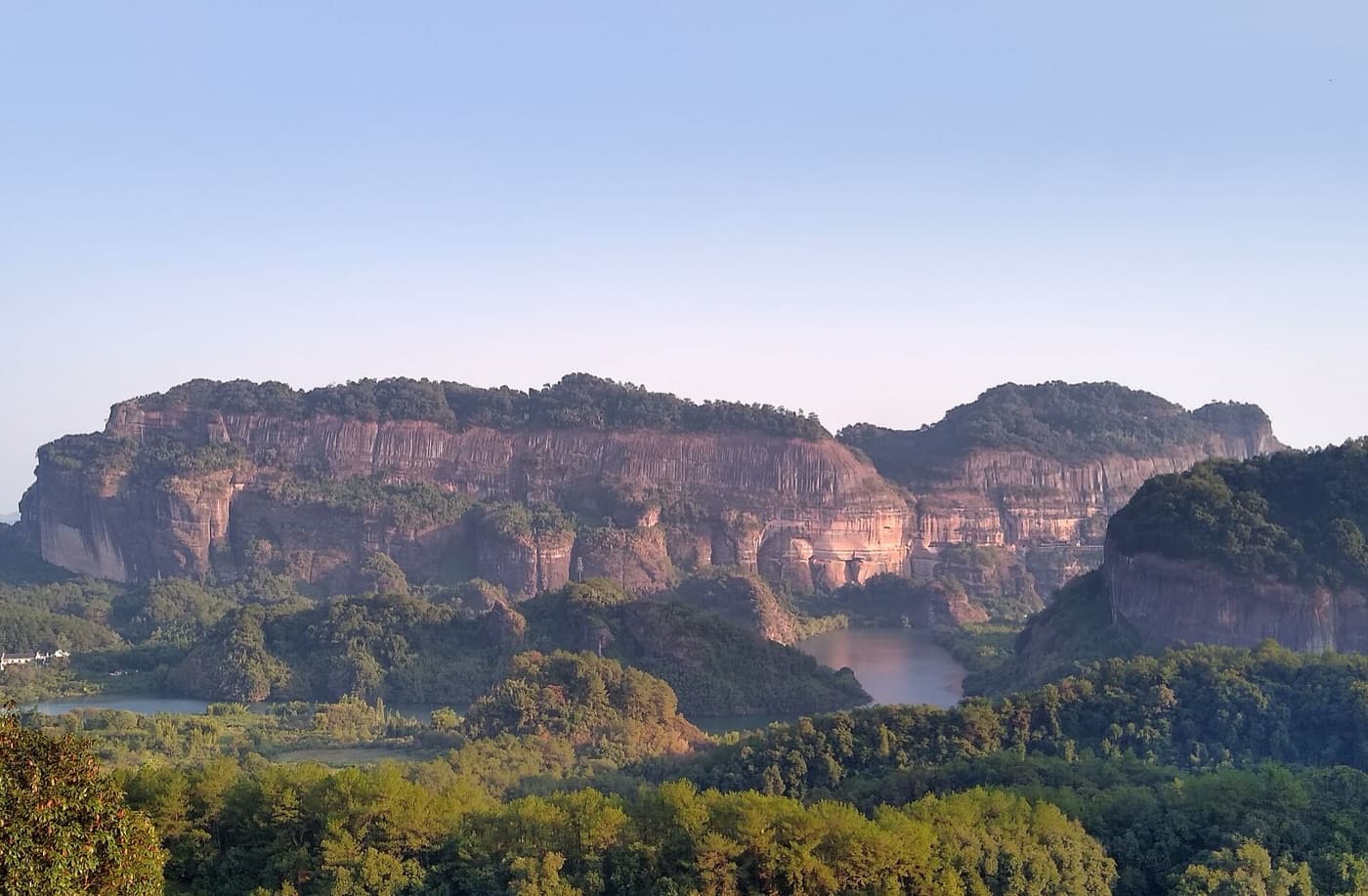
Danxia Mountain
1–2 days · ¥100; cable car up ¥45, round trip ¥70 on weekdays
Danxia Mountain is known as one of the “Four Famous Mountains of Guangdong” and as “the foremost of China’s seven most beautiful Danxia landforms.” It is renowned for its steep, striking karst scenery. The Yang Yuan Stone and Yin Yuan Stone, whose unusual shapes resemble human organs, attract many visitors and invite reflection on nature’s uncanny creativity. The Yunya Plank Walk (Yunya Zhandao) and the Nine-Nine Ladder (Jiujiu Tianti) are the most thrilling attractions in the scenic area and are not to be missed by adventurous travellers.
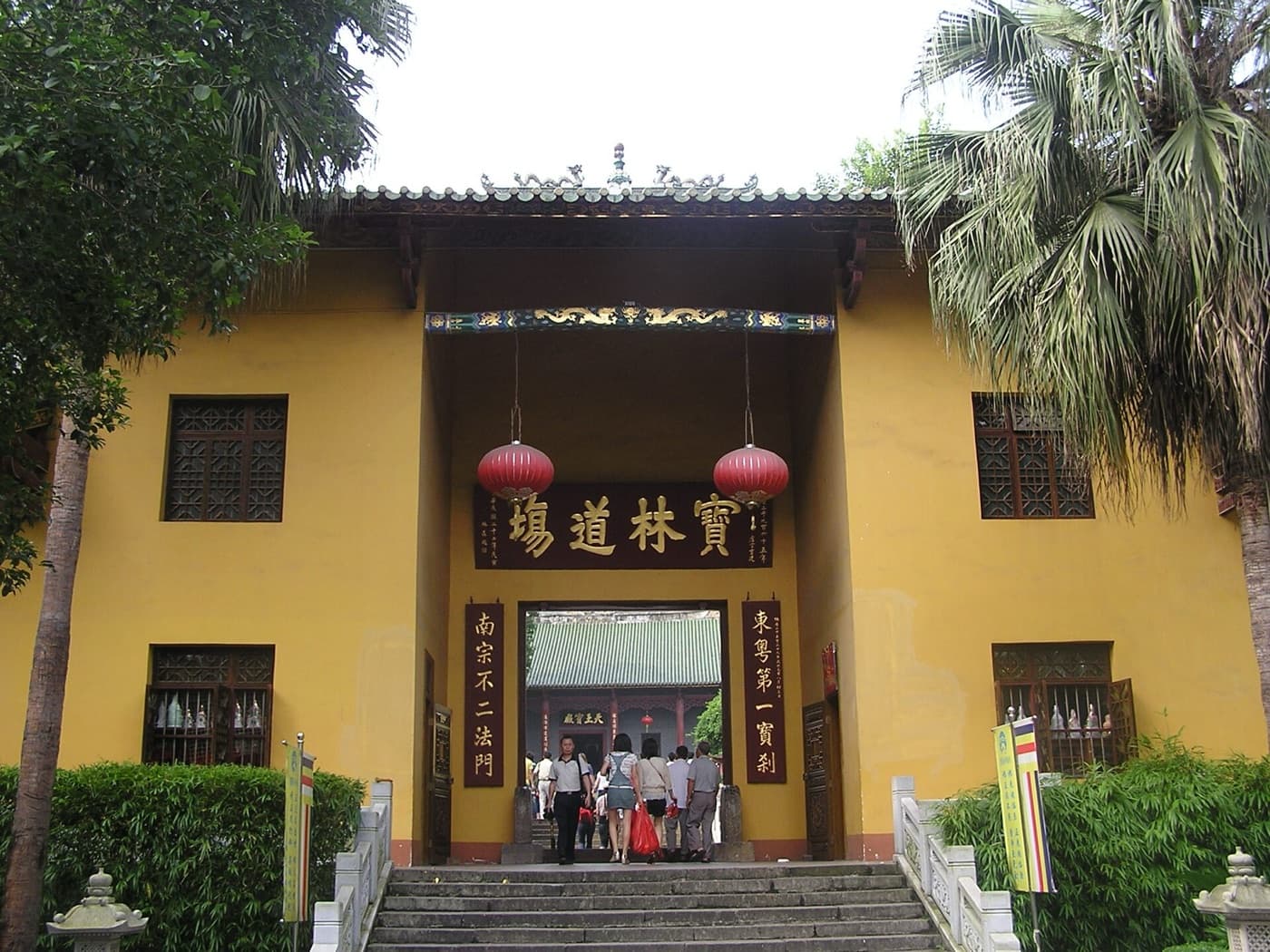
Nanhua Temple
2–3 hours · ¥20
The Sixth Patriarch of Chan Buddhism, Huineng, presided over Caoxi and developed the Southern school of Chan. For this reason, Buddhists refer to Nanhua Temple as the “Ancestral Court” (Zuting). According to legend, after Huineng recited his famous verse “Bodhi has no tree,” the Fifth Patriarch secretly passed on his robe and bowl to him. Huineng then travelled south to this place to practise, founding one of the schools of Chan Buddhism.
Maozi Peak Scenic Area
Known as the “Hometown of the Ginkgo,” much of this area retains its primeval forest character. Wild fruit grows across the hillsides, birds and animals move through the woods, and flowers and trees are abundant, filling the air with fragrance in every season. In late autumn, the ginkgo groves turn golden and the forest glows in shades of yellow, drawing many enthusiastic photographers. It has earned the nickname “the Jiuzhaigou of Northern Guangdong.”
1 day · ¥50
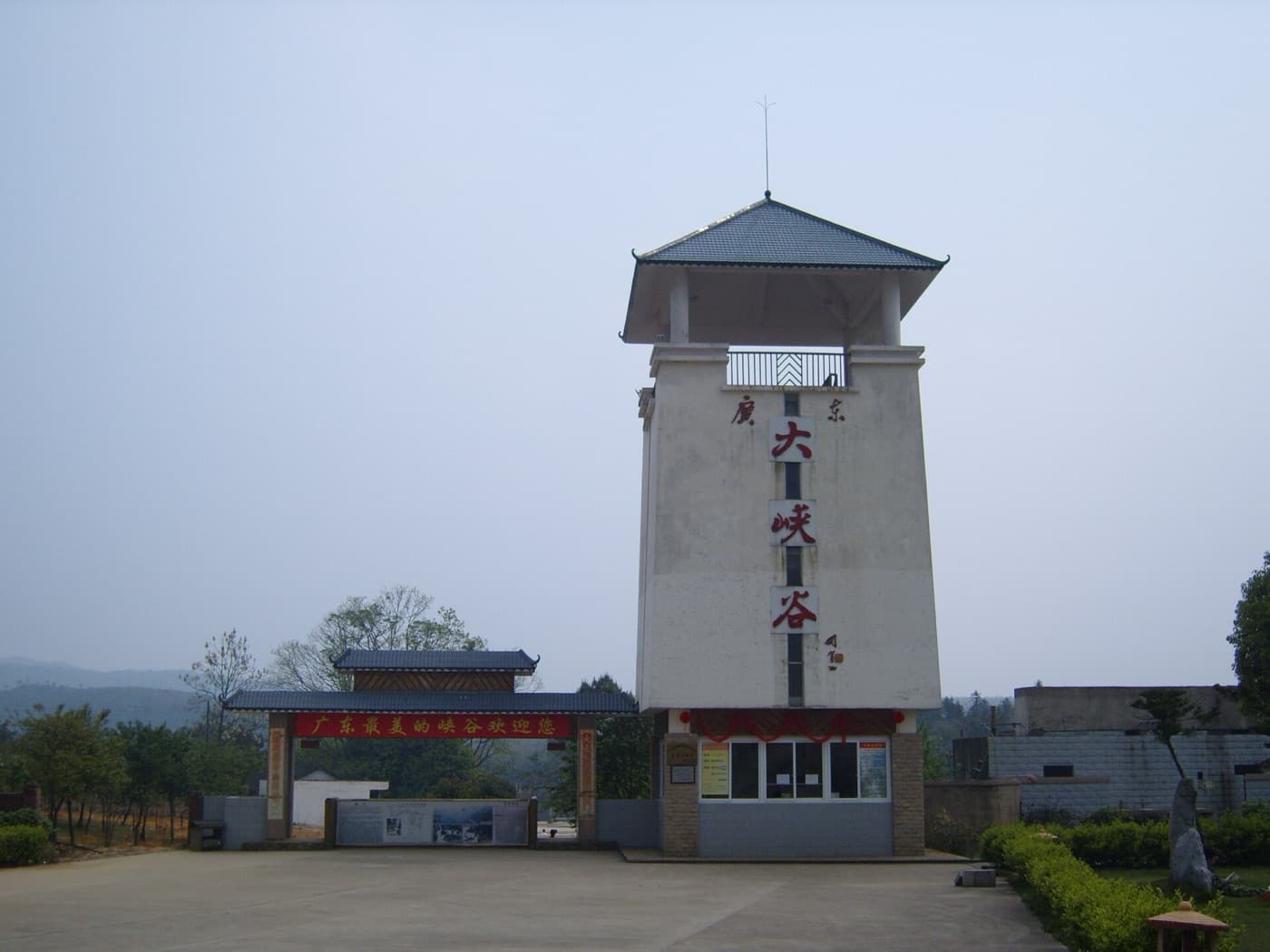
Ruyuan Grand Canyon
The Grand Canyon combines the marvels of Huangshan, with clouds and mist that feel like a fairyland; the peril of Huashan, with its 1,386 steps of cloud ladders at slopes exceeding 50°; and the grace of Zhangjiajie, with its green peaks and criss-crossing ravines. Beyond the breathtaking handiwork of nature, the canyon is also a rigorous test of your physical stamina, making it a perfect destination for adventure and exploration.
0.5 days · ¥65; aerial performance ¥5
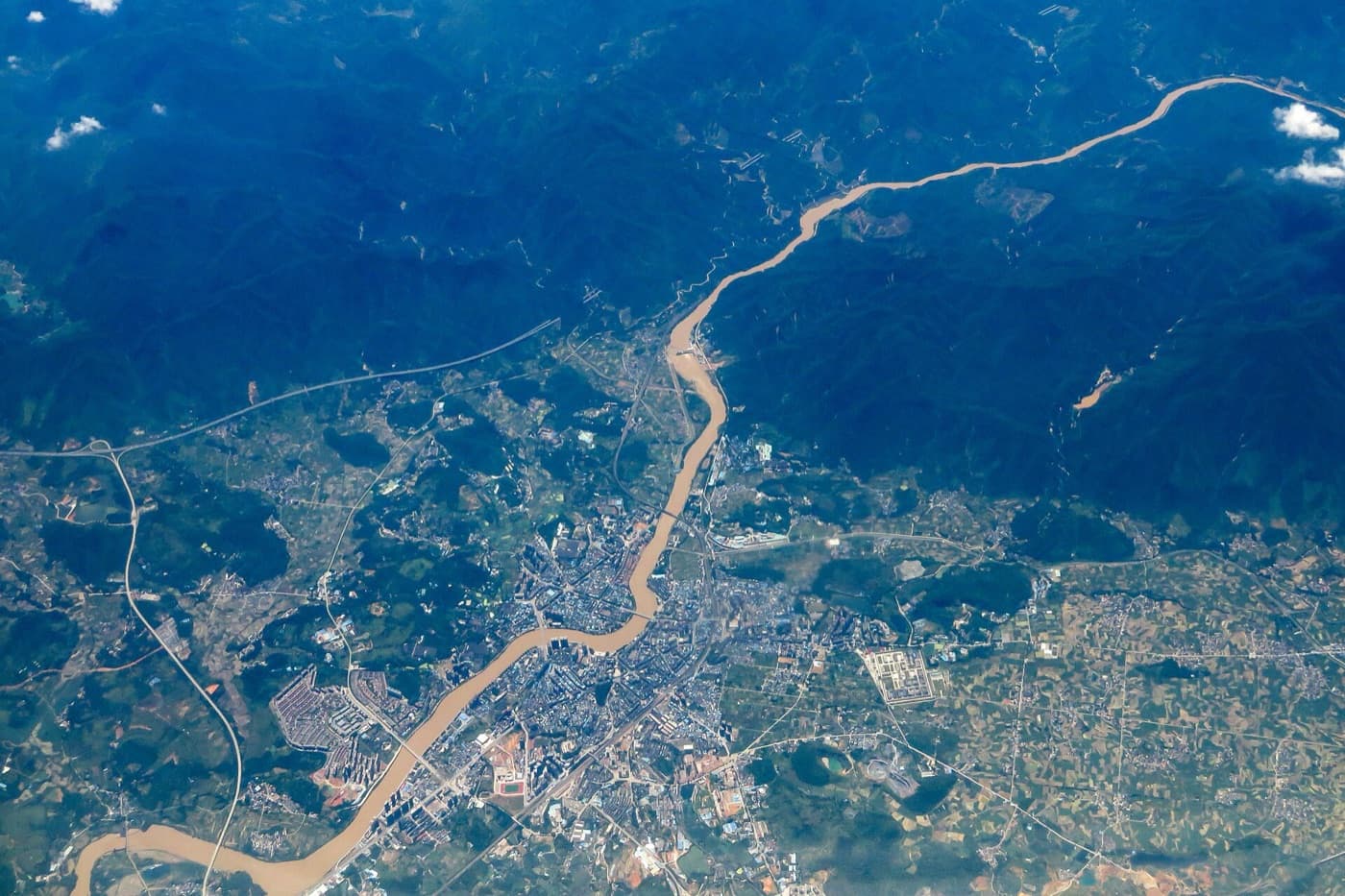
Nanling National Forest Park
Located at Wuzhishan in Ruyuan County, in the middle section of the Nanling mountain range, this is the source of the Beijiang, a tributary of the Pearl River. It contains the best-preserved primeval forest in Guangdong and more than 30 peaks over 1,000 metres high. Shikengkong, the highest peak in Guangdong, is known as the “First Peak of Guangdong” and has long attracted mountaineers. Heavy rainfall in the mountains produces abundant streams, rapids and waterfalls, giving the area rich hydropower resources.
1 day · ¥80
Baojing Palace
Baojing Palace is distinguished by its majestic, wondrous and grand character, and is known as “the first cave paradise of Lingnan.” It is composed mainly of Biluo Cave, Bilü Lake and Lion Hill. Inside the cave, the scale is impressive: bamboo shoot-like stalagmites and pillar-like columns stand in forests, and delicate stalactites take shapes resembling birds, flowers, insects and fish, or flying and running animals. The whole cavern resembles a palace, which is why it is called “Baojing Palace” (Jewelled Crystal Palace). It offers not only extraordinary natural scenery but also considerable geological and archaeological value. On the cave walls of Biluo Cave, more than 120 cliff inscriptions have been preserved.
2–3 hours · ¥76
Guangdong First Peak
The scenic area is mainly divided into Shikengkong Viewing Area, Taiping Cave Yao Village, Chengjia Great Valley, Tianquan Waterfall, Tianquan Mountain Hot Springs and the First Peak Rafting Route. In addition to the natural scenery, visitors can soak in hot springs and go rafting. In the evening, guests can gather around a bonfire to watch Yao folk dances or join in singing and dancing with the local people.
1 day · ¥78
Yunmen Temple
Yunmen Temple was the founding monastery of the Yunmen school, one of the “Five Houses” of the “One Flower, Five Petals” lineage of Chan Buddhism. This 1,100-year-old temple in Lingnan houses the tallest Guanyin statue in Jiangnan, standing 11.4 metres tall and covered entirely in gold leaf.
2–3 hours · ¥5
Yingxi Peak Forest Corridor
Strange peaks, hidden caves, odd rocks, sea-of-clouds views, mountain streams, bamboo groves and farmhouses… the scenic area stretches more than 10 li (about 5 km) and is known as “the finest peak forest scenery in the southern heavens.”
5 hours · Nine-Fold Heaven Peak Forest ¥68; Peak Forest ¥68; Pengjia Ancestral Hall ¥40; Laohu Valley underground river rafting ¥138; Huanghua Creek bamboo raft ride ¥40
Huangchuan Three Gorges
Longquan Gorge is celebrated for its waterfalls; Lengjia Gorge features sheer cliffs, hanging rocks and cliff inscriptions; and Yangtiao Gorge has a narrow, perilous riverbed where the sky appears as a thin line. In fact, from here all the way to the stretch of river near Shiluo Town in northern Yangshan County, there are other gorges such as Dongguan Gorge and Dali Gorge, forming a continuous river-and-mountain landscape of towering peaks, winding waters and unbroken scenery.
¥50
Lianzhou Underground River
Located in Dongpo Town, 25 km north of Lianzhou city centre, the underground river is hidden within a large karst cave mouth. The scenic area covers 53,000 square metres. Visitors can admire a variety of stalactite formations, with rocks resembling “Maitreya,” “Guan Yu” and “Meng Jiangnü.”
1.5–2 hours · ¥108
Sanpai Yao Village
The Yao ethnic culture of Lianan is the most distinctive attraction of northern Guangdong. The Babai Yao, who live in Lianan, are unique in China, preserving unique, simple and richly colourful ethnic customs. The houses of Sanpai Yao Village climb the hillside in tiers, with corridors and passageways linking each household together to form the characteristic Yao “pai” layout. It is a must-visit site for experiencing Yao folk culture. At Sanpai Yao Village, you can learn about Yao wedding and funeral customs, join a Yao bonfire party, learn from Yao women how to brew rice wine and make tofu, taste the distinctive Yao water wine, admire the embroidery of Yao girls, and experience the simple, unhurried everyday life of the Yao people.
0.5–1 day · ¥50
Gulong Gorge
Winner of the Popularity Award at the 2017 China Travel Review Scenic Spot Rankings, and known as the hometown of China's rafting.
Getting there & around
Apart from Shaoguan, which is served by the Beijing–Guangzhou Railway, travel in northern Guangdong relies mainly on road transport. Fortunately, the road network is well developed: express coaches and direct buses run from Guangzhou to destinations across the region, and most trips take only a few hours.
High-Speed Rail
The Wuhan–Guangzhou High-Speed Railway passes through Qingyuan and Shaoguan stations in northern Guangdong, allowing direct travel from Guangzhou to the region. Shaoguan Station is the first stop on the Wuhan–Guangzhou line after it enters Guangdong, located in Chishui Village, Xilian Town, Wujiang District, Shaoguan.
Eat & drink
Northern Guangdong cuisine is not part of the mainstream Cantonese repertoire, but the region still has plenty of local specialties. In Qingyuan, for example, there is white-cut chicken and Longgui cold-water tripe; in Shaoguan, locals love stir-fried shankeng snails. In the mountains of Liannan, the Yao table is full of wild delicacies, while the bamboo-tube liquor of Shixing leaves a lingering fragrance on the palate.
Where to stay
Having become a popular tourist destination in Guangdong in recent years, the main towns and counties of northern Guangdong have no shortage of accommodation. Remote Yao villages, however, offer only homestays in local families’ homes, where conditions are more basic.
Nuoting Chain Hotel
Nuoting Chain Hotel- Address:
- No. 25 Jiefang Road, Zhenjiang District, Shaoguan
- Phone:
- 0751-8186668
- ¥
- Standard room ¥126
Shopping
Danxia Baimao tea is famous across Guangdong, and Ruyuan County’s Yao Mountain winter mushrooms, Qujiang’s Shatian pomelo and Nanxiong’s ginkgo nuts all enjoy a fine reputation. Qujiang’s distinctive silkworm-moth wine (蚕蛾公酒) is also a prized health tonic.
Source: China Self-Guided Travel 2025 (《中国自助游》, Tianjin Science & Technology Press, Aug 2024), pp. 2391–2400. Translated from the Chinese edition; names and prices follow the guidebook. · Plain text version