Shidao Chishan Mountain
Chishan Scenic Area in Shidao takes its name from the red stone found here. Mountains, sea, lakes and harbours blend together into a landscape of remarkable beauty.…
Shidao Chishan Mountain, Weihai
Key facts
- Admission
- ¥135
- Opening hours
- 7:30—17:00
- Time needed
- 0.5–1 day
- Getting there
- Rongcheng city runs a dedicated tourist bus line to the scenic area. The fare is ¥5.
- Guidebook rating
- 4 / 5
From China Self Guided Travel 2025, page 1395. Open in Google Maps
About Shidao Chishan Mountain
Chishan Scenic Area in Shidao takes its name from the red stone found here. Mountains, sea, lakes and harbours blend together into a landscape of remarkable beauty. Chishan is home to Chishan Fahua Temple, a famous thousand-year-old temple on the Jiaodong Peninsula and a popular place for incense offerings and blessings. The Great Deity of Chishan, the largest sea god statue in the world, has a viewing platform beneath the seated figure from which you can look out over the coastline. Jile Bodhisattva Realm, China's first musical fountain square dedicated to Guanyin, features dancing water jets in her honour.
Frequently asked questions
How much does Shidao Chishan Mountain cost?
Admission to Shidao Chishan Mountain is ¥135, as listed in the 2025 guidebook. Prices can change; check the official channel before you go.
What are the opening hours of Shidao Chishan Mountain?
Shidao Chishan Mountain is open 7:30—17:00.
How do I get to Shidao Chishan Mountain?
Rongcheng city runs a dedicated tourist bus line to the scenic area. The fare is ¥5.
How long should I spend at Shidao Chishan Mountain?
Plan on 0.5–1 day for Shidao Chishan Mountain.
Where is Shidao Chishan Mountain?
Shidao Chishan Mountain is in Weihai, Shandong Province, in the East China of China.
More places in Weihai
Rushan Silver Beach Resort
A sandy shoreline stretching for 20 km with a gentle slope and a flat expanse of fine, soft, snow-white sand, which gives it the name "Silver Beach." The scenic area offers mountains, sea, islands, reefs, beaches, springs, forests and rivers, along with rich natural and cultural attractions. Along the coast there are more than a dozen hotels and over 400 mid- to high-end villas for accommodation, and the seafood is very affordable.
Free · 2 hours
Rongcheng Swan Lake
The largest wintering habitat for swans in Asia, and a paradise for wild whooper swans and a cradle for photography. Stay in a seaweed-thatched house, lean on the doorway to watch the swans, and see them spread their wings and fly, lost in the freedom of the open air and the beauty of the lake.
Free admission · 3–4 hours
International Bathing Beach
A natural seawater beach and a favourite destination for holidays and summer retreats. The beach also has an amusement park, a water park and other leisure facilities, along with water activities such as speedboats, pleasure boats and jet skis.
Free · 4 hours
Hailu Island
Hailu Island, also known as "Sea Cat Island," is a beautiful island far from the mainland and a nesting and breeding ground for countless seabirds. It is also a kingdom of flowers and plants, covered with hibiscus, reeds and wild jujube trees. White birds, red flowers and rolling waves combine into a scene that looks like a painting of an island landscape.
¥120 · 1–1.5 hours
Liugong Island Scenic Area
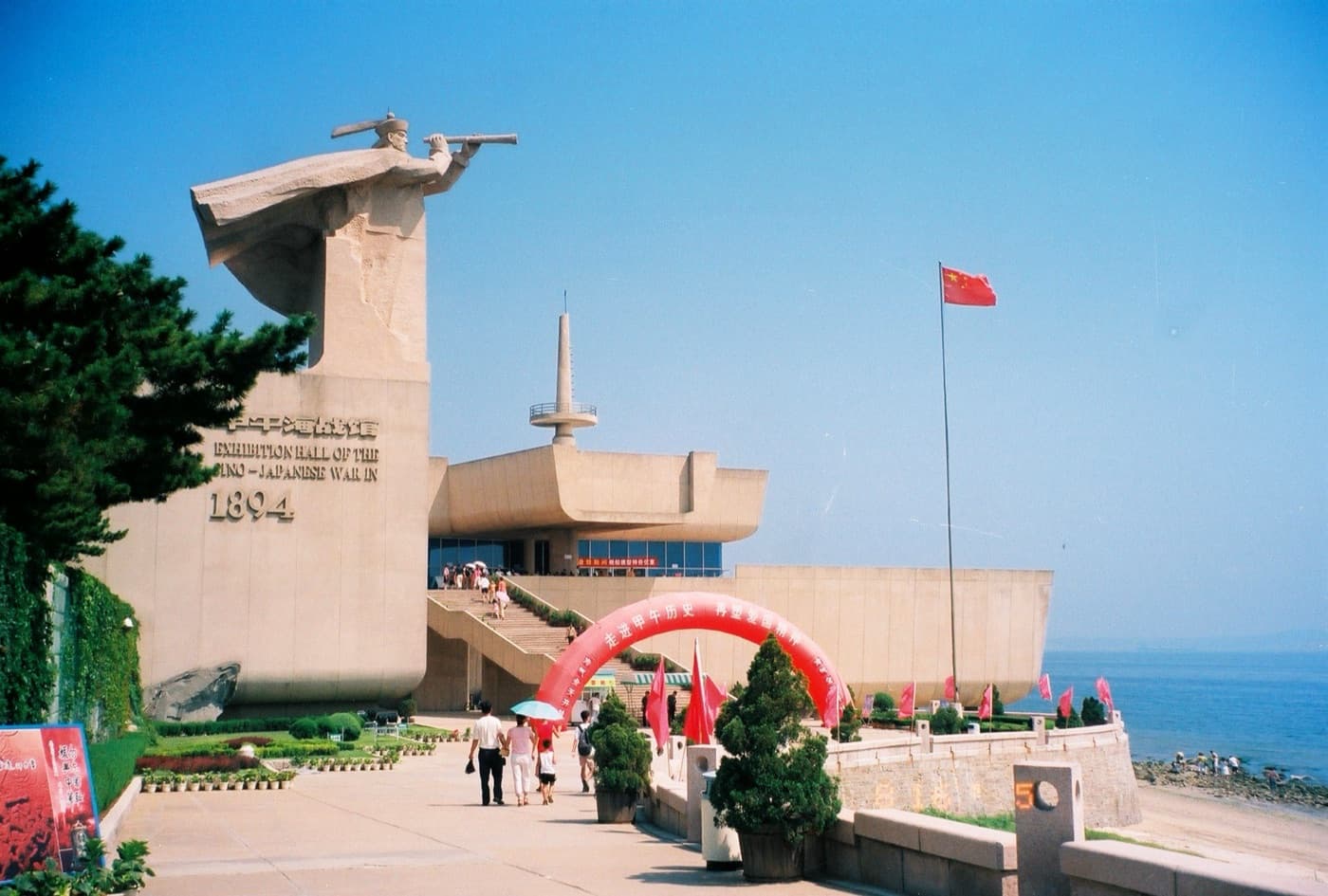
Although a beautiful legend surrounds the origins of Liugong Island, it has been completely overshadowed by the Sino-Japanese naval battle fought here, and today its natural scenery also bears the deep marks of war. The Battle of the Yellow Sea during the First Sino-Japanese War is the island's central theme. The Sino-Japanese Naval Battle Hall, the ruined Gongsuo Rear Battery, the Qidingshan Battery and 28 other battle sites from the war make up the main sights. Giant naval guns of the Beiyang Fleet, the Beiyang Fleet Iron Pier and ancient artillery emplacements are housed in the Sino-Japanese War Museum. The Beiyang Fleet Admiralty Office, the command headquarters of the Beiyang Navy, is also here.
¥122 · 4–6 hours
Chengshantou (Cape Chengshan)
Chengshantou is the first place in China to see the sunrise over the sea. Qin Shi Huang called it “the end of heaven.” It lies 75 kilometres from Weihai city centre and has long been known as “the place where the sun rises.” It is also called “China’s Cape of Good Hope.” Green peaks stretch on, the vast sea is a deep blue, cliffs stand tall, and giant waves throw up white spray, creating a majestic scene. Main attractions include Hailu Island, Shihuang Temple, the Qin-dynasty standing stone, Bairi Terrace, the remains of the Qin Bridge, Wanghai Pavilion, Guantao Pavilion, Zhenlong Rock and a wildlife park. Strolling along the beach here is also a good choice, and some spots see very few visitors.
¥148; Hailu Island ¥120 · 3–4 hours