Muta Temple
The surviving wooden pagoda is a rebuilt brick-and-timber structure, and climbing it offers a view over the city of Zhangye. However, it is far less grand than the purely wooden,…
Muta Temple, Zhangye
Key facts
- Admission
- ¥25
- Opening hours
- 8:00—17:00
- Time needed
- 1 hour
- Getting there
- Near Giant Buddha Temple Cultural Square (bus stop)
- Guidebook rating
- 3 / 5
From China Self Guided Travel 2025, page 738. Open in Google Maps
About Muta Temple
The surviving wooden pagoda is a rebuilt brick-and-timber structure, and climbing it offers a view over the city of Zhangye. However, it is far less grand than the purely wooden, rotating pagoda described in Marco Polo's travel accounts. It now houses the Gaotai Folk Customs Museum.
Frequently asked questions
How much does Muta Temple cost?
Admission to Muta Temple is ¥25, as listed in the 2025 guidebook. Prices can change; check the official channel before you go.
What are the opening hours of Muta Temple?
Muta Temple is open 8:00—17:00.
How do I get to Muta Temple?
Near Giant Buddha Temple Cultural Square (bus stop)
How long should I spend at Muta Temple?
Plan on 1 hour for Muta Temple.
Where is Muta Temple?
Muta Temple is in Zhangye, Gansu Province, in the Northwest of China.
More places in Zhangye

Mati Temple Scenic Area
Here you can see a magnificent complex of cave temples, ride horses to explore a huge waterfall deep in the mountains, or follow a guide and a horse caravan through dense forest to the Jinta Temple Grottoes. The route to the Jinta Temple Grottoes is treacherous. There are just two caves, each barely over ten square metres, but they contain China's only high-relief flying apsara (feitian) carvings. The statues themselves are fairly ordinary, yet the trek appeals to many visitors.
¥74 · 2–3 hours
Binggou Danxia Scenic Area
Binggou Danxia is renowned for its majestic, dramatic scenery and is known as "Red Cliffs Thousands of Feet High." Its main sights include Divine Camel Greeting Guests, Roots of the Earth and Ghostly Ancient Fortress, whose lifelike forms are vivid and striking.
¥58 (admission + sightseeing shuttle) · 3–4 hours
Giant Buddha Temple Scenic Area
The temple houses the largest indoor clay-sculpted reclining Buddha in China, measuring 34.5 metres long and 7.5 metres wide. Built in 1098, it is the only large Western Xia Buddhist temple still standing in China. The Giant Buddha Temple now houses the Zhangye Museum.
¥38 · 1–2 hours
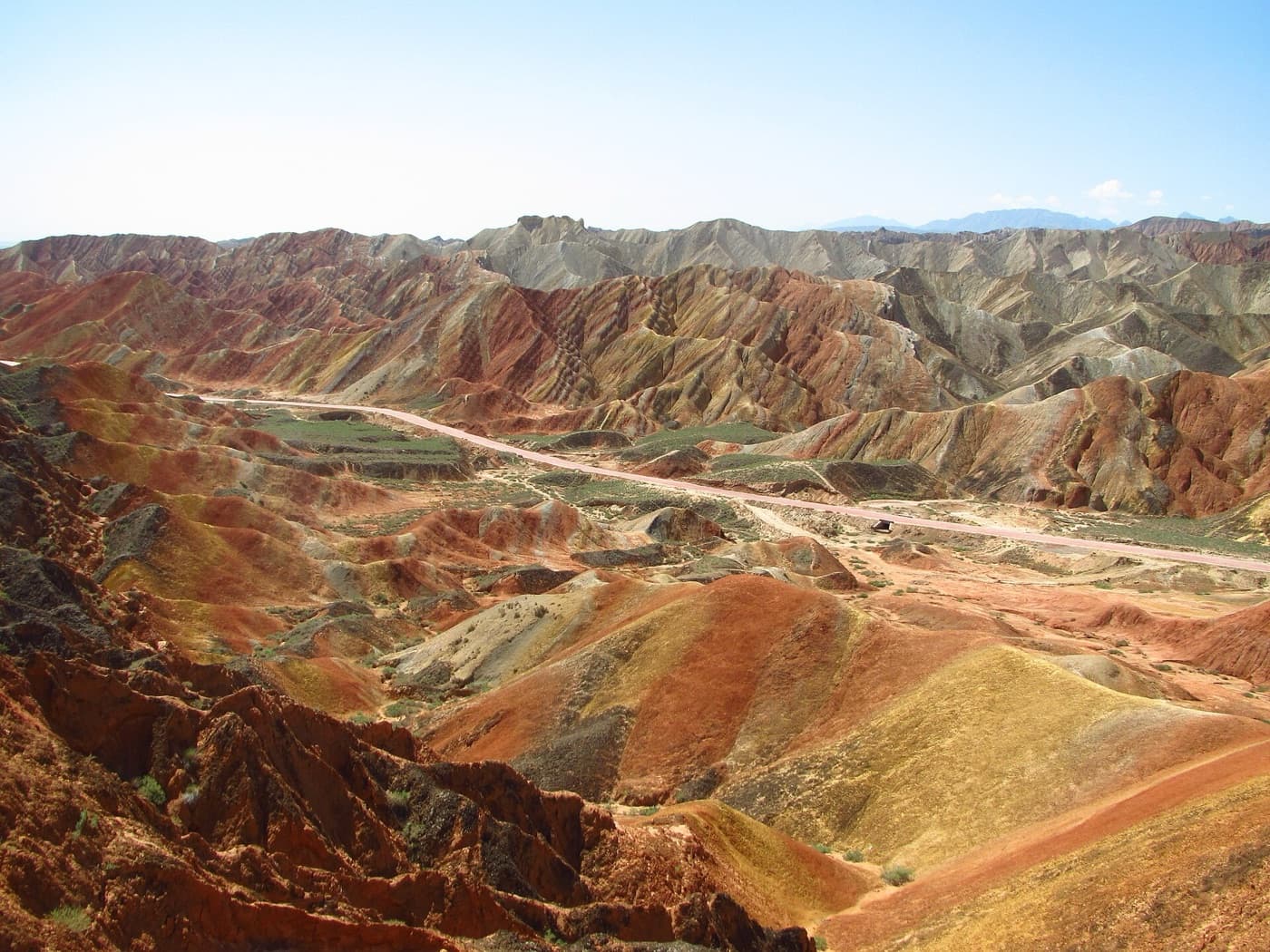
Zhangye Global Geopark
Zhangye Danxia shifts from red to yellow, from grey to white, and through purple, blue, gold and jade green, its ridges rising and rolling into the distance. Nature's artistry here is simply breathtaking. Inside the scenic area, Viewing Platform 2 offers the panoramic view, while Viewing Platform 3 is the best place to watch the sunset. At sunrise, Viewing Platforms 4 and 5 reveal a dramatic landscape of razor-sharp ridges, so it is best to plan a full day for your visit.
¥75 · 3–5 hours
Qilian Mountains National Park
The Qilian Mountains straddle the border between Qinghai and Gansu provinces. They form a vast marginal mountain system on the northeastern edge of the Qinghai-Tibet Plateau, with primal, pure and rustic mountain scenery and enchanting primeval forests. After the start of summer, the forests turn green, yet the peaks remain snow-capped and the glaciers never melt. In the sunlight, the scene is indescribably magnificent.
Free · 1–2 days
Kangle Grassland
The area includes the Danxia geological scenic zone, Kanglong Temple, the Machang Tan grassland, snow-mountain adventure tourism and more. In spring and summer the grassland is green as a carpet; in autumn wild fruit hangs heavy on the branches; in deep winter the snow lies white and the scenery is magnificent. Every July, herders in festive dress gather here from all directions for a grassland festival, with spectacular horse racing, wrestling, archery and other performances.
¥60 · 3–5 hours