Hushan Great Wall
Located on the bank of the Yalu River in northeastern Dandong, Hushan Great Wall marks the easternmost end of the Great Wall built during the Ming dynasty, facing North Korea across the river.…
Hushan Great Wall, Dandong
Key facts
- Admission
- ¥60
- Opening hours
- 8:30—16:30
- Time needed
- 3–4 hours
- Getting there
- Take a minibus from Dandong Railway Station to Hushan (about ¥4, 40 minutes); or take a Dandong–Kuandian bus and get off at Hushan; or take a taxi, which costs about ¥40.
- Guidebook rating
- 4 / 5
From China Self Guided Travel 2025, page 2268. Open in Google Maps
About Hushan Great Wall
Located on the bank of the Yalu River in northeastern Dandong, Hushan Great Wall marks the easternmost end of the Great Wall built during the Ming dynasty, facing North Korea across the river. Climb to the top of the wall for views of both China and North Korea. Here rivers wind like ribbons, fertile plains stretch out, and villages dot the landscape. With the Great Wall itself, the Sleeping Buddha, Tiger Mouth Cliff and 28 scenic spots in total, it is an excellent destination on the outskirts of Dandong.
Frequently asked questions
How much does Hushan Great Wall cost?
Admission to Hushan Great Wall is ¥60, as listed in the 2025 guidebook. Prices can change; check the official channel before you go.
What are the opening hours of Hushan Great Wall?
Hushan Great Wall is open 8:30—16:30.
How do I get to Hushan Great Wall?
Take a minibus from Dandong Railway Station to Hushan (about ¥4, 40 minutes); or take a Dandong–Kuandian bus and get off at Hushan; or take a taxi, which costs about ¥40.
How long should I spend at Hushan Great Wall?
Plan on 3–4 hours for Hushan Great Wall.
Where is Hushan Great Wall?
Hushan Great Wall is in Dandong, Liaoning Province, in the Northeast of China.
More places in Dandong

Fenghuangshan (Phoenix Mountain)
A visit to Phoenix Mountain is all about the thrill of climbing. Although its height is far below that of Mount Hua, its steepness is strikingly similar. The ridge on Laoniubei on the western route is the best proof: the path is slippery and hard to navigate, and no steps have been carved, so you must pull yourself up by the iron railings. There is also the plank road known as 'Unrivalled Under Heaven,' cut into the cliff face with no iron railing for protection, which seems almost like a dead end. Yet perhaps only in such places can you truly savour the meaning of finding life in desperate straits. Visiting Phoenix Mountain in October, you will also see red maple leaves covering the hillsides, so the danger is at least balanced by splendid scenery.
¥80; cable car ¥50 · 0.5–1 day
Yalu River
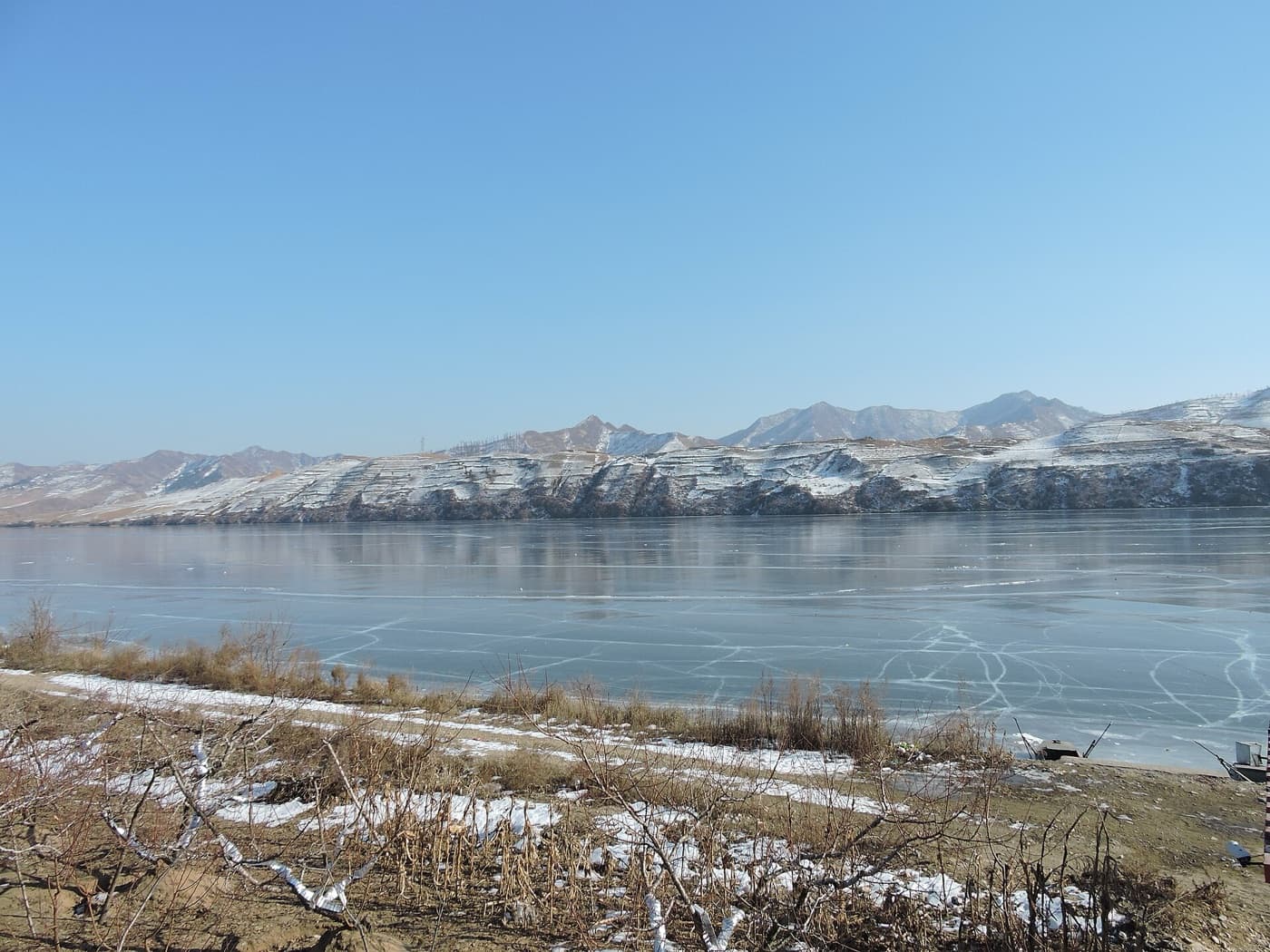
The Yalu River's water is a deep green, resembling a duck's head, which gave it its name. It rises in the Changbai Mountains of Jilin, flows past Changbai, Ji'an, Kuandian and Dandong, and empties into the Yellow Sea to the south. Stretching 795 kilometers, it forms the border between China and North Korea. Two bridges stand side by side across the river: the Broken Yalu River Bridge, half of which was destroyed by American forces in 1950, and another bridge built in 1940, which remains a key transport route between China and North Korea today.
Qingshangou Scenic Area
Qingshan Gou is a renowned tourist destination, with cascading springs, waterfalls, green hills, clear lakes and numerous historic sites. It is one of the few unpolluted areas in the world. Its distinctive draws include the famous 'Chinese Painters' Village,' the Hutang Valley, which is called the 'Finest Secluded Place Under Heaven,' the bells of the thousand-year-old Qingfu Temple, and the unique Manchu culture.
Qingshan Lake ¥40, boat ticket ¥55; Hutang Gully ¥40; Feipu Gully ¥40; Manchu Culture Park ¥30; combined pass ¥185 (includes boat ticket) · 1 day
Lüjiang Village
Across the river from North Korea, Lujiang Village has beautiful scenery and simple, genuine local customs. Its landscape changes with the seasons, making it an ideal place to get close to nature and return to it. Climb Shenxian Peak to photograph spectacular sunrises and seas of clouds.
Free · 1–2 days
Tianqiaogou
Tianqiaogou is known for offering a view of three counties from one mountain. Besides natural scenery such as forests, peaks and oddly shaped rocks, it also has cultural sites, including relics of the Northeast Anti-Japanese United Army. The seasons here are distinct. Autumn is especially beautiful, with the mountains aglow in red leaves, earning it a reputation as the place where China's maple leaves are reddest and most brilliant. It is also an ideal summer retreat.
¥120 · 1 day
Memorial Hall of the War to Resist US Aggression and Aid Korea
A great place to revisit the history of the War to Resist America and Aid Korea. The museum's panoramic gallery combines painting, sculpture, lighting and sound effects with high technology to vividly recreate the battle scenes of the encirclement and annihilation fight on the banks of the Chongchon River in Korea.
Free · 1–2 hours