Gaotai Dwellings
Only here can you truly feel the pulse of ancient Kashgar through its unusual dwellings. The Uyghur people have lived here for generations, in houses built against the cliffside.…
Gaotai Dwellings, Kashgar
Key facts
- Admission
- Free
- Opening hours
- 9:30—20:30
- Time needed
- 2–3 hours
- Getting there
- Near East Bazaar (东巴扎) bus stop
- Guidebook rating
- 3 / 5
From China Self Guided Travel 2025, page 891. Open in Google Maps
About Gaotai Dwellings
Only here can you truly feel the pulse of ancient Kashgar through its unusual dwellings. The Uyghur people have lived here for generations, in houses built against the cliffside. Among these haphazardly constructed buildings, with rooms stacked upon rooms, structures rising over lanes and bridges spanning streets, criss-crossing alleys have formed, like a vast maze where it is easy to lose your way.
The Gaotai Dwellings are both an ideal place for traditional Uyghur handicrafts and a showcase of Uyghur decorative arts, carving and painting. Visitors from China and abroad have praised them as the “living folk museum of the Uyghur people.”
Frequently asked questions
How much does Gaotai Dwellings cost?
Admission to Gaotai Dwellings is Free, as listed in the 2025 guidebook. Prices can change; check the official channel before you go.
What are the opening hours of Gaotai Dwellings?
Gaotai Dwellings is open 9:30—20:30.
How do I get to Gaotai Dwellings?
Near East Bazaar (东巴扎) bus stop
How long should I spend at Gaotai Dwellings?
Plan on 2–3 hours for Gaotai Dwellings.
Where is Gaotai Dwellings?
Gaotai Dwellings is in Kashgar, Xinjiang Uygur Autonomous Region, in the Northwest of China.
More places in Kashgar
Id Kah Mosque
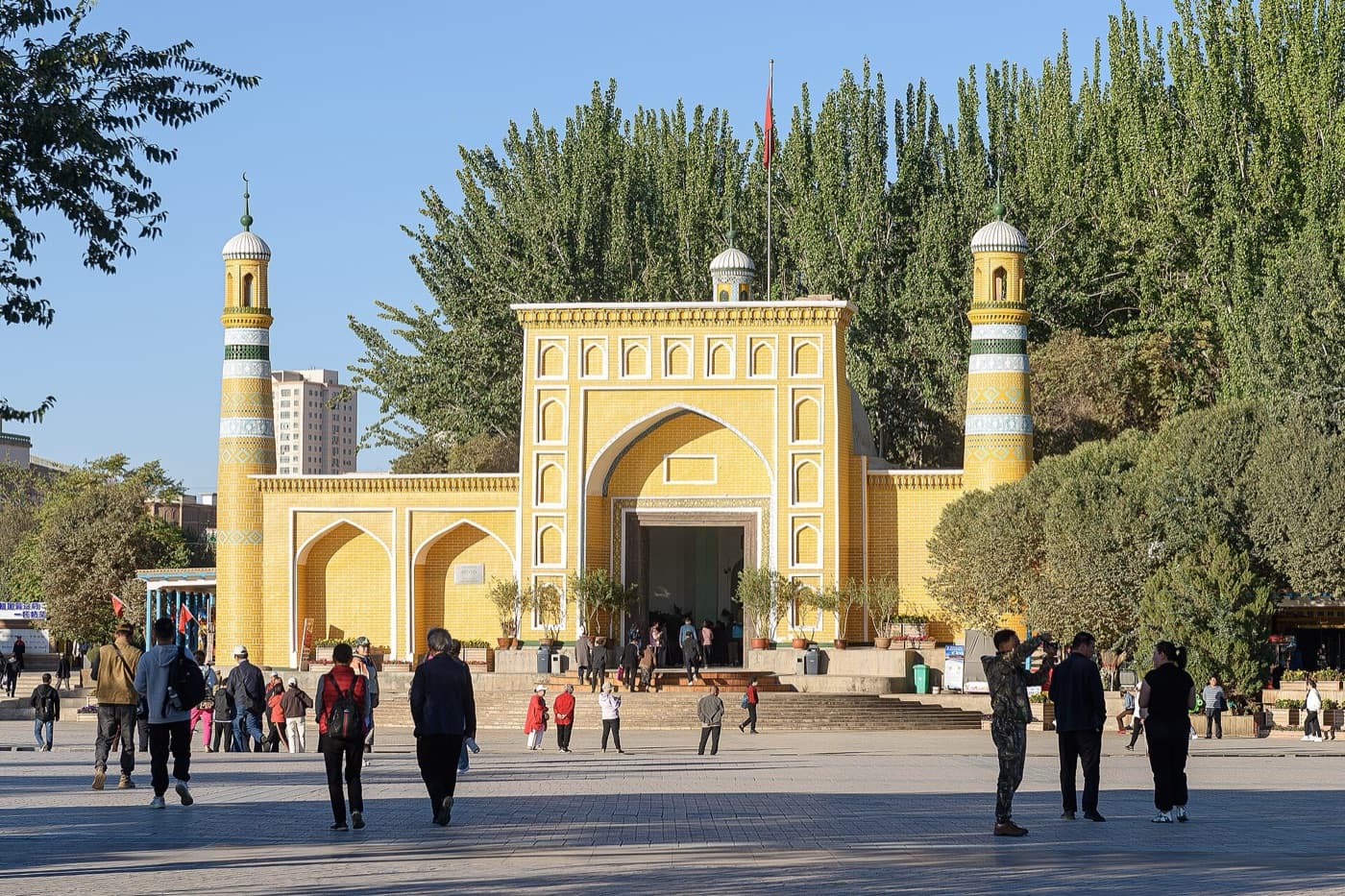
The prayer hall of the Id Kah Mosque is a vast Islamic-style structure, supported by 158 carved columns outside the hall. As Xinjiang's most important mosque, it welcomes two to three thousand worshippers every day. On Friday, the weekly holy day, attendance exceeds 5,000. Each year during Eid al-Adha, tens of thousands of Muslims gather here to pray, then celebrate in the square with Sama dancing until dawn.
¥45; free for Muslims · 2 hours
Kashgar Old Town
A filming location for parts of the famous film The Kite Runner, Kashgar Old Town is the living embodiment of Kashgar's long history. Its streets and alleys crisscross and wind, making it China's only maze-like urban district with a distinctly Islamic cultural character. The houses lining the roads, built mainly of brick, earth and timber, are simple and elegant, and some have stood for over a century. Wandering its lanes is therefore the best way to understand the customs and culture of the local people.
Free · 4 hours
Fragrant Concubine Tomb (Apak Khoja Tomb)
The Fragrant Concubine Tomb, also known as the Apak Khoja Mazar, lies in the Fragrant Concubine Garden in Haohan Village, 5 km east of Kashgar. Construction began in 1640. The palace-style Islamic mausoleum, dominated by blue and white glazed tiles, is a model of Uyghur architectural art. It holds 72 members of the Apak Khoja family across five generations. The most famous of them is Apak Khoja, who won hereditary control of the Yarkent Khanate and led the Islamic Ishaqiyya sect in the 17th century. The Fragrant Concubine was Apak Khoja's granddaughter, Iparhan.
Off-season ¥60; peak season ¥120 · 2–3 hours
Kashgar Grand Bazaar
The Kashgar Grand Bazaar lies by the eastern gate of Kashgar city and is the largest international trade market in Northwest China. In the past, merchant caravans from Xi'an converged here, whether they travelled the northern or southern routes along the Tianshan Mountains. With more than 2,000 years of history, the bazaar is a great place to find many distinctive local goods.
3–4 hours
Pamir Plateau
The Pamir Plateau's scenery is celebrated as one of the most beautiful in the world. Here you will find Tajik villages in Tashkurgan, Karakul Lake (one of Xinjiang's three great lakes), and a spectacular array of snow-capped peaks: Muztagh Ata (7,546 m), Kongur Peak (7,719 m), Kongur Jiubie Peak (7,595 m) and Qogir Peak (K2) (8,611 m).
Free · 2–3 days
Karakul Lake
“Karakul” means “Black Sea.” The lake lies 198 km south of Kashgar, on the Subash Grassland at an altitude of 3,600 m, near National Highway 314 leading to Khunjerab. Its backdrop is Muztagh Ata, known as the “Father of Snow Mountains.” Muztagh Ata rises to 7,509 m and is a famous mountaineering destination. Its majestic, pure and elegant form, along with its beautiful legends, has made it a symbol of pure love for the Tajik people. The lake covers 10 square km and consists of two connected lakes with dark green waters.
¥50 · 2–3 hours