Nanning travel guide
南宁
Nanning's distinctive feature lies in a single word: green. It truly deserves the name “Green City”, and the saying “half the city in green trees, half in buildings” is no empty boast. Every street has lush,…
10 places · In the guidebook: pages 2460–2474

Nanning, Guangxi Zhuang Autonomous Region · AI illustration for China Trip
Quick itinerary
Nanning in 1 days
- Day 1
- Qingxiu Mountain Scenic Area→
- Ethnic Cultural Relics Garden→
- Nanhu Park→
- Yunding Sightseeing→
- Folk Song Lake Scenic Area (Minge Lake)
The feel of the place
- Green City
- Nanning's distinctive feature lies in a single word: green. It truly deserves the name “Green City”, and the saying “half the city in green trees, half in buildings” is no empty boast. Every street has lush, leafy trees, and between the buildings there are verdant green belts. Most admirable of all, residents have answered the “Green City” call, and almost every household grows green plants on its balcony. Walking along Minzu Avenue, Nanning's most impressive and handsome boulevard, you are sheltered by greenery even under the blazing sun, and the plants here carry a romantic subtropical charm.
- Motorcycles
- Nanning was once dubbed the “City of Motorcycles”, as it had the second-highest number of motorcycles in China. This brought some traffic headaches, and the city has rarely provided dedicated motorcycle lanes. Nanning began restricting motorcycle registrations years ago, however, so there are fewer motorcycles on the streets today.
Nanning's Top Ten Premium Scenic Views
1. Yangmei Ancient Charm (Yangmei Ancient Town Scenic Area)
2. Green Hills and Pagoda Shadows (Qingxiu Mountain Scenic Area)
3. Nanhu Lakeside Charm (Nanhu Leisure Promenade)
4. Spring Boating on the Yong River (Yong River Scenic Belt)
5. Reminiscing at Wangxian (People's Park)
6. Brocade of Mingshan (Damingshan National Nature Reserve Scenic Area)
7. Divine Palace of Yiling (Yiling Rock Scenic Area, Wuming District)
8. Monkey Fun at Longhu (Longhushan Scenic Area, Long'an County)
9. Green Wilds by the Phoenix River (Liangfengjiang National Forest Park)
10. Nine Dragons Playing with a Pearl (Jiulong Waterfall Cluster Scenic Area, Heng County)
Ghost Festival
For Nanning people, the Ghost Festival may rank second only to Spring Festival. The whole of the seventh lunar month is filled with the scent of burning incense, and residents make a point of holding solemn ancestor worship, sending their forebears all manner of “goods” by burning offerings. During the Ghost Festival there is also a tradition of eating duck.
Preparation & Information
Language
Nanning's everyday speech is mainly Guangxi Baihua (a Cantonese-based dialect), but most people understand Mandarin and Cantonese.
Climate & Best Time to Visit
Nanning lies in the basin south of the Tropic of Cancer. Rainfall is abundant, and the city has a typical subtropical monsoon climate, with an average annual temperature of around 21°C. It stays green all year round and is suitable for visiting in any season, but July and August are hot, humid and very rainy, so bring sun protection, rain gear and similar essentials.
Things to see
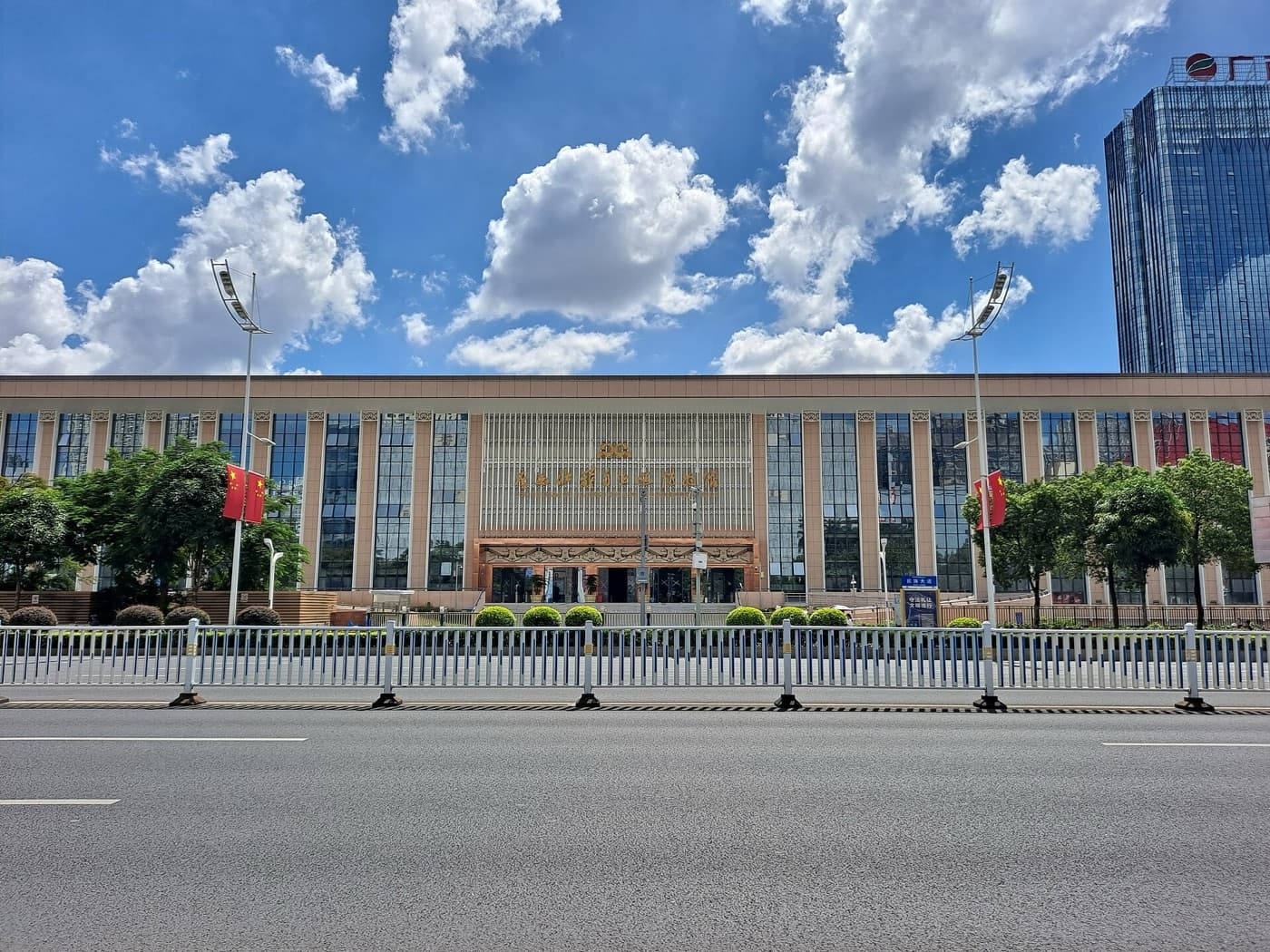
Guangxi Zhuang Autonomous Region Museum
2–3 hours
After four years of careful preparation, the renovated Guangxi Museum has reopened. To learn about Guangxi's history and culture, this is an excellent starting point. Metalware, ceramics, jade artefacts and works by famous calligraphers and painters unearthed in Guangxi are all on display. Don't miss the Ethnic Cultural Relics Garden on the south side of the museum, which features replicas of Dong wind-and-rain bridges and Yao grain storehouses, along with a large collection of ethnic costumes and handicrafts.
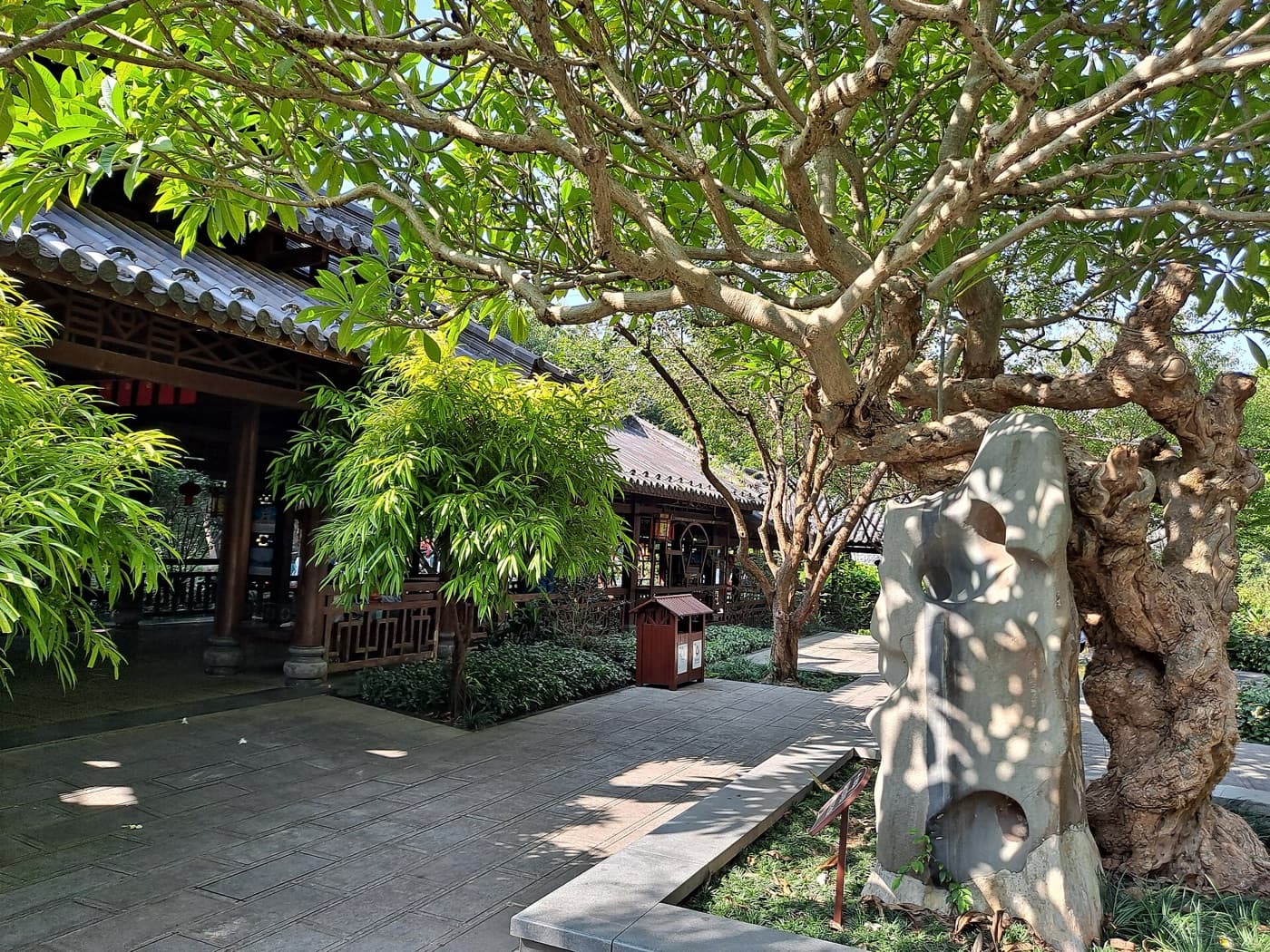
Qingxiu Mountain Scenic Area
0.5–1 day · ¥20
Known as the “Giant Lungs of Nanning”, its air is wonderfully fresh. Lush green trees cover the mountain, framing two large artificial lakes on its slopes, Tianchi (Heavenly Pool) and Yaochi (Jasper Pool). Together with the uniquely styled Thai Garden, it is a must-see when visiting Nanning.
Nanhu Park
Nanhu Park is planted with subtropical trees typical of the south, including palms, fan palms and areca palms. It also contains three “gardens within the garden”: a herbal garden growing more than 200 precious Chinese medicinal herbs; an orchid garden with prized varieties such as Xiahui, Jianlan, Moulan and Huoyan orchids; and a bonsai garden.
2–3 hours · Free
Folk Song Lake Scenic Area (Minge Lake)
Folk Song Lake (Minge Lake) offers attractions including the Floating Murals, Bar Street, Diecui Valley, Qinxiang Garden, Taojin Beach, Yongzhu Garden and Palm Island. It is one of the most scenic waterside areas in central Nanning, and in the evening you can take a boat ride to enjoy the city's night views.
1–2 hours · Daytime tour ¥100; night tour ¥150
Tingzi Pier
With its romantic European-style church and yacht marina, Tingzi Pier has a fairy-tale charm. On holidays, gather a few friends and stroll along the pier to enjoy views of the Yong River, and you can even take photos that look like a scene from Europe.
1 hour
Getting there & around
Getting There & Away
Nanning is mainly reached by road, rail and air. Waterway travel mostly runs to Guangzhou, Hong Kong and Macau.
By Air
Airport Shuttle
Airport shuttle buses run daily between the city and the airport and can be boarded directly at the CAAC ticket office near the railway station. If you prefer not to take the airport shuttle, you can also catch Bus 301 (¥3) from beside Chaoyang Square, though it is very crowded.
By Rail
The main railway trunk lines include the Xiang-Gui, Qian-Gui, Li-Gui and Nan-Kun lines. The Ningtie Line connects northward with all the national trunk lines, eastward to Zhanjiang and Guangzhou, southward to Qinzhou, Fangchenggang and Beihai, and southwestward to Hanoi in Vietnam. The newly built Nan-Kun Railway now offers services from Nanning to Kunming. The Liuzhou–Nanning Intercity High-Speed Railway, also known as the Liu-Nan Passenger Dedicated Line, is Guangxi's first intercity high-speed railway. It runs from Liuzhou through Laibin City and Binyang County to Nanning, covers 224 km, is designed for speeds of 250 km/h, and opened on 30 December 2013. Journey times are 1 hour 16 minutes from Nanning East to Liuzhou, and 2 hours 21 minutes from Nanning East to Guilin.
By Road
Coaches run daily to all cities and counties in Guangxi. The city has five passenger service stations, operating nearly 400 long-distance routes that cover 7 regions both within and beyond Guangxi and 57 counties and cities.
By Waterway
Sail down the Yong River to Guangzhou, Hong Kong, Macau and other destinations.
Getting Around the City
Within Nanning, the main options are city buses, minibuses, suburban buses and air-conditioned express coaches (known locally as “lengba”, or “cold buses”).
Nanning currently has five operating metro lines: Lines 1, 2, 3, 4 and 5. Metro fares range from ¥2–7.
Nanning taxis start at ¥9 for the first 2 km, then ¥2 per km. At night, the flag-fall is ¥11 for the first 2 km.
Southeast Asia Tourism & Food Festival
Every year in mid-to-late October, Nanning holds a grand Southeast Asia Tourism & Food Festival, featuring snacks from across China as well as Southeast Asian flavours. Food lovers should not miss it.
Guangxi Folk Songs
In Nanning, the best places to enjoy Guangxi folk songs are Nanning Ethnic Minorities Square and the nearby Nanning International Convention and Exhibition Center. Large folk song performances are held here regularly, and it is also the main venue of the Nanning International Folk Song Arts Festival. Address: at the junction of Minzu Avenue and Zhuxi Road. Buses 8, 32, 205 and 704 all serve the area.
Young People of Nanning
Young locals in Nanning are incredibly busy every evening, typically hopping between four or five venues. The first stop is badminton, the second is dinner, and after eating they head to a third stop, a café, to catch up with friends. The fourth stop is a nightclub or bar. Those with exceptional energy add a fifth stop: a tea house near Nanhu Lake or Jinchahua Park for a cup of tea. After that comes a sixth stop on Zhongshan Road for snacks, and those who drink add a few more bottles of beer. They get home at three or four in the morning and still show up for work on time the next day.
Yongjiang Night Cruise
The Yongjiang Night Cruise is a water tour recently developed in Nanning. Departing from Minsheng Pier, it passes the city's landmark buildings and attractions, such as the ancient city wall and Changyou Pavilion. Summer is the recommended season. Riding the gentle river breeze, visitors can admire the beautiful scenery of the Yong River and hear stories of Nanning's history and culture.
Nanning Wuxu International Airport
AirLocated 32 km from the city centre, capable of handling large aircraft such as the Boeing 737. It currently operates domestic and international routes, with direct flights to major cities across China as well as Hanoi and Bangkok.
- Phone:
- 0771-96365
Jiangnan Coach Station (江南客运站)
Road- Address:
- 236 Xingguang Avenue, Jiangnan District
Eat & drink
Guangxi cuisine belongs to the Cantonese family, but its flavours have developed a distinct style of their own. Guangxi cooking excels at preparing chicken, fish, snake and pigeon. The most famous dishes include Huadiao Drunken Chicken, Paper-Wrapped Chicken, Wushi Qichang Fish and Walnut-Fragrant Pigeon.
For most travellers, local snacks are far more appealing than grand local dishes, and much better value. Across Guangxi you'll find all kinds of rice noodles, zongzi (glutinous rice dumplings) and more. Lao You Fen (Old Friend Rice Noodles) may be the snack that best represents Nanning.
Lemon duck, found in restaurants of all sizes, is another dish with a distinctive flavour. Of course, Nanning's fruit is not to be missed: there are many varieties of tropical fruit, and they are cheap. Apart from a few specialty restaurants, Zhongshan Road is also a bustling food street.
Jianzheng Road
Recommended FoodNanning has a saying: “Locals go to Jianzheng Road, out-of-towners go to Zhongshan Road.” Jianzheng Road is home to many long-established shops serving Guangxi specialities. Rolled rice noodles, local-style pancakes and soy milk with fried dough sticks are especially popular. Prices are reasonable, and for around ¥30 per person you can eat until you need to hold the wall to walk out.
Shuji Rice Noodle Shop (Qixing Road branch)
Recommended FoodDon't forget to try Lao You Fen while in Nanning. Shuji is one of the most popular spots, with generous ingredients and a rich broth.
- Address:
- 46 Qixing Road
- Phone:
- 18070942595
Where to stay
Nanning offers a wide choice of accommodation, from budget to upscale.
Phoenix Hotel
Recommended AccommodationFour-star hotel, a 10-minute walk to the railway station, with an airport bus stop directly opposite. Generous breakfast, with complimentary drinks such as Coca-Cola.
- Address:
- 63 Chaoyang Road
- Phone:
- 0771-2119839
- There are many budget hotels on Zhenxing Street in Luoping. They are close to the long-distance bus station and cheaper.
Shopping
Specialty shops are concentrated along Chaoyang Road, Xinmin Road and Qixing Road. The shops are generally small, mostly famous-brand outlets and boutiques. There are also many shopping malls, such as Wanda Plaza, Mengzhidao Department Store, Wangfujing Department Store and Jinhu Plaza.
Specialty Shopping Streets
Xiguan Road
Specialty Shopping StreetsThe liveliest open-air night market, starting at 18:00 every day. Rows of stalls selling mid- to low-end clothing, accessories, cosmetics and toys line the street, alongside plenty of local snacks. It is bustling beyond words.
Three Streets and Two Lanes
Specialty Shopping StreetsRefers to three old streets (Xingning Road, Minsheng Road and Jiefang Road) and two Ming and Qing dynasty alleys (Jinshi Lane and Yinshi Lane). It is one of Guangxi's historic and cultural districts, first built during the Song dynasty, and it contains the Qing-era residential compounds that survive in urban Nanning. Today it is a blend of history and modernity, and a stroll through it gives a real sense of the city's heritage.
Nightlife
Nanning's nightlife can hold its own against Guangzhou's. There's no need to worry about how to fill your evenings: you can enjoy the rich night-time square culture at the city's many plazas, or head to Donggelu Road and Taoyuan Road, where KTV bars, casual bars, specialty restaurants and fitness centres are concentrated.
Day trips & beyond
Daming Mountain
Daming Mountain has a unique climate, with high peaks and dense forests making it a classic mountain forest landscape. Each season has its own character: spring mists, summer waterfalls, autumn clouds and winter snow. Summer is especially cool, making it the top choice for escaping the heat in southern Guangxi, while its winter snow makes it China's southernmost snow-viewing destination. The summits of the main ridge hold six natural grasslands ringed by ancient trees; the grass grows in the middle with no trees, and locals call it Tianping Shanxu (Sky Flat Mountain Market).
4–6 hours
Longhu Mountain
Most of the scenic area is covered by primeval forest, home to more than a thousand plant species and over a hundred animal species, many of them nationally rare plants and Class I and Class II nationally protected animals. Watching wild macaques is the most thrilling activity at Longhu Mountain.
3–4 hours
Detian Transnational Waterfall
The fourth-largest transnational waterfall in the world. It cannot be compared with Niagara Falls, but Detian remains one of the most celebrated sights near Nanning and has been named one of China’s six most beautiful waterfalls.
3–5 hours
Yangmei Ancient Town
Yangmei Town is a charming old town with many historic sites, including the famous Kuixing Tower, the Qing Dynasty Street, a cluster of Ming and Qing architecture, and the former residence of Liang Lieya, a revolutionary of the 1911 Revolution.
1 day
Sanliyangdu Scenic Area
The scenery of Sanliyangdu rivals that of the Li River in Guilin. Visitors can take a boat tour, but with ample time it is best to explore on foot, savouring the breathtaking views at leisure. The mountains are dotted with karst caves, the most distinctive being Mingjing Yan (Mirror Cave), Qinshui Yan (Zither Water Cave) and Dushan Yan (Solitary Hill Cave). Traces of Tang-dynasty stone inscriptions can also be found here.
3–4 hours
Source: China Self-Guided Travel 2025 (《中国自助游》, Tianjin Science & Technology Press, Aug 2024), pp. 2460–2474. Translated from the Chinese edition; names and prices follow the guidebook. · Plain text version